Article
Jan 6, 2026
Voice AI Agents for Private Medical Clinics: Capture Every Patient, Reduce No-Shows, and Free Your Front Desk
Private medical clinics miss new patient calls daily while front desk staff manage check-ins. AI phone agents capture inquiries, confirm appointments, and handle admin calls 24/7. Here is how.
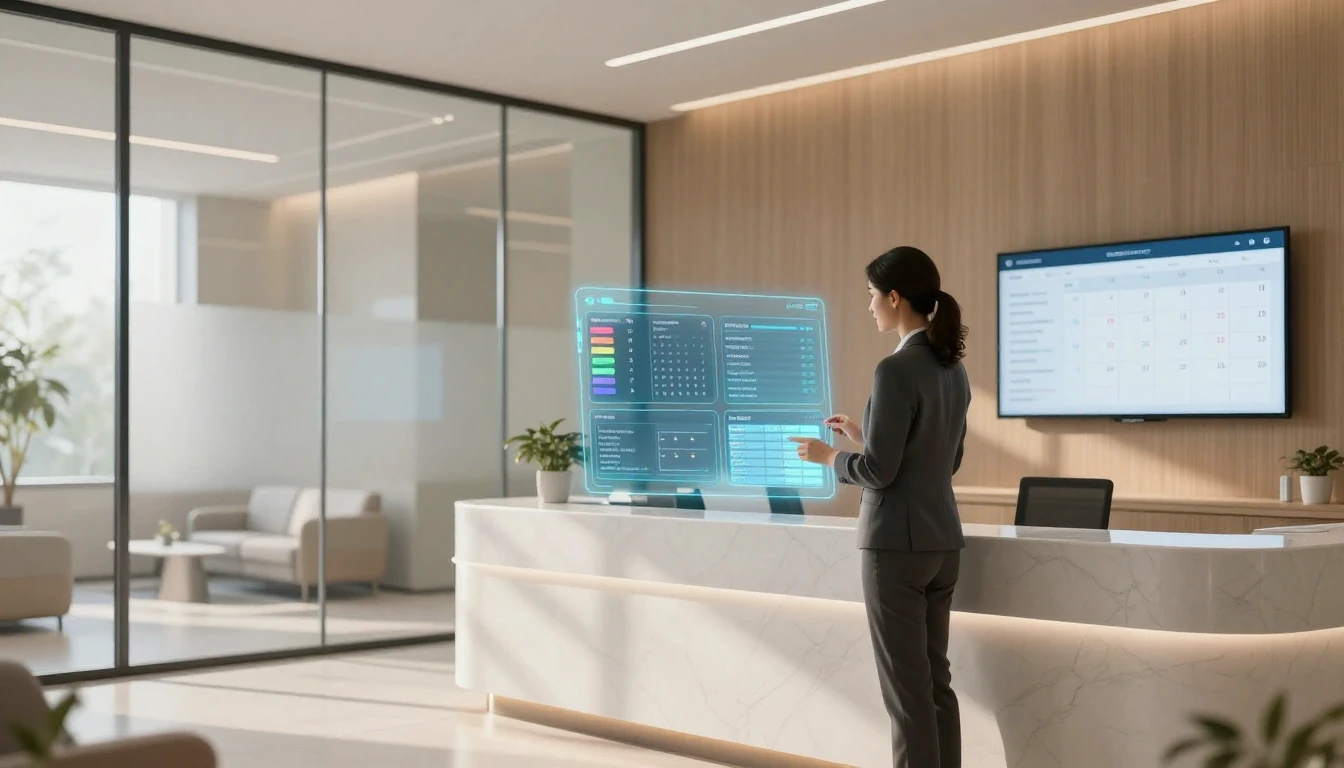
Article Summary: This article explains why private medical clinics - from general practice to aesthetic and specialist clinics - consistently miss calls that carry both revenue and patient care consequences. It maps eight distinct inbound call types against their urgency levels and AI handling protocols, quantifies the annual revenue impact of missed new patient inquiries, and presents AI phone agents as a structured solution for capturing every administrative call while routing clinical matters to qualified staff. Includes a comprehensive 8-row call type triage table, new patient revenue impact calculation, realistic aesthetic and specialist clinic case study, 11-function comparison table, HIPAA compliance guidance, and step-by-step implementation guide.
Important compliance note: This article provides operational and commercial information about AI phone agents in healthcare settings. It does not constitute legal or regulatory advice. Private medical clinics must ensure that any AI phone system deployed in their practice meets HIPAA requirements and that their AI vendor signs a Business Associate Agreement (BAA) prior to deployment. Always consult your practice's legal counsel or compliance advisor before implementing any patient-facing communication technology.
Key Highlights
• Private medical clinics handle up to eight distinct types of inbound calls, ranging from routine administrative inquiries to after-hours concerns that require immediate clinical assessment - each with a different urgency level and different consequences when missed.
• Front desk staff managing simultaneous check-ins, insurance verification, and patient paperwork cannot reliably answer every call - particularly during Monday morning surges, lunch hours, and after-hours periods.
• Missing a new patient inquiry call costs a private clinic an estimated $1,500 to $3,500 or more in first-year patient revenue, depending on specialty. Across a year of missed calls, this can represent six figures in lost practice income.
• Patient no-show rates have a well-documented relationship with appointment confirmation contact. AI-driven confirmation calls before each appointment reduce no-shows without consuming front desk staff time.
• AI phone agents handle all administrative call types - new patient intake, appointment booking, insurance FAQs, prescription refill logging, and referral capture - while routing clinical matters to the appropriate staff member through a structured triage protocol.
• HIPAA compliance is a non-negotiable requirement for any AI phone system deployed at a medical clinic. The AI vendor must sign a Business Associate Agreement (BAA) before deployment.
• Clinics that implement voice AI report measurable improvements in new patient capture rates, front desk call handling capacity, and a reduction in administrative call volume reaching clinical staff.
Table of Contents
• Why Private Medical Clinics Miss More Calls Than They Realize
• The Monday Morning Call Surge: A Recurring Front Desk Crisis
• The Eight Types of Inbound Calls Every Private Clinic Handles
• The Revenue Cost of Missed New Patient Inquiry Calls
• How Missed Calls Drive Patient No-Shows
• 7 Ways AI Phone Agents Transform Private Medical Clinic Operations
• Case Study: A Multi-Practitioner Aesthetic and Specialist Clinic
• Traditional Front Desk vs. AI Phone Agent: Side-by-Side Comparison
• HIPAA Compliance and AI Phone Agents: What Every Clinic Needs to Know
• How to Implement Voice AI at Your Medical Clinic
• Common Mistakes Medical Clinics Make with Phone Management
• Best Practices for Medical Clinic Voice AI
• Future Trends: AI in Private Healthcare Communication
• Frequently Asked Questions
• Conclusion
Introduction
A new patient researching private dermatology clinics in their area finds three options through Google. All three have good reviews. They call the first one. After four rings, a voicemail greeting asks them to leave a message. They call the second. Someone answers but immediately places them on hold. They call the third, which answers immediately with a professional greeting, confirms the physician's availability, and books an initial consultation within two minutes.
The third clinic just acquired a patient whose first-year spending on consultations and treatments may exceed $3,000. The first two will never know they had that opportunity.
This plays out dozens of times every week at private medical clinics across the country. The problem is not a lack of clinical skill or an unwelcoming practice culture. It is a structural gap between call volume and the capacity of front desk staff to manage it - particularly at the moments when demand is highest.
For private medical clinics, the stakes attached to every missed call are higher than in almost any other industry. The caller may be a new patient seeking a practice they can trust with their health. They may be an existing patient with a post-procedure concern that, if left unaddressed, leads to both a clinical problem and a negative review. They may be a referring physician trying to coordinate care for a patient with a time-sensitive condition.
This article explains why private medical clinics miss calls, what those missed calls cost in patient revenue and care quality, and how AI phone agents - deployed with the appropriate triage logic and compliance framework - solve the problem for every call type a clinic receives.
Why Private Medical Clinics Miss More Calls Than They Realize
The structural reason private clinics miss calls is well-established: front desk staff are doing too many things at once. In a busy clinic, the person responsible for answering the phone is simultaneously managing patient check-ins, verifying insurance, processing payments, handling requests from clinical staff, and managing the appointment schedule. When a new call arrives during any of these tasks, it competes for attention it often cannot receive.
The specific windows when call volume peaks and coverage gaps are widest include:
• Monday mornings, when a full weekend of accumulated inquiries, weekend illness calls, and appointment requests floods in from 8:30 AM onward
• Lunch hours, when front desk staff coverage drops and call volume from working patients continues
• The period immediately following any marketing activity - a social media post, an email campaign, or a promotional offer - when inquiry volume spikes suddenly
• After clinical hours, when existing patients call with questions about their day's appointment, medication side effects, or test results
• Friday afternoons, when patients attempt to reach the clinic before the weekend for issues that cannot wait until Monday
Research from Alliance Virtual Offices indicates that small businesses miss between 40% and 62% of incoming calls. Medical clinics face the additional challenge that their front desk staff are not purely customer service roles - they are also patient intake coordinators, insurance processors, and clinical support. The breadth of the role makes consistent phone coverage structurally difficult.
The problem is compounded for smaller practices. A solo physician or a two-doctor clinic may have a single front desk coordinator managing everything. During peak call periods, every call that arrives while the coordinator is occupied with another patient goes unanswered. In a specialty practice with high per-visit revenue, each one of those unanswered calls represents a meaningful amount of lost income.
The Monday Morning Call Surge: A Recurring Front Desk Crisis
In the private medical clinic world, Monday morning is the most predictable and most challenging call management window of every week. Here is why it happens and why it consistently overwhelms front desk capacity.
Over the weekend, people experience symptoms. They research clinics. They decide to make appointments. They may have received a social media ad for an aesthetic treatment and decided over Saturday dinner they want to book a consultation. They delay calling until Monday because the clinic is closed on weekends.
At 8:30 or 9:00 AM on Monday, all of those deferred calls arrive at once. At the same time, the front desk is opening the clinic, checking in the first patients of the week, pulling charts, handling messages left over the weekend, and managing the usual first-of-week administrative volume.
The calls that do not get through in the first 20 minutes of Monday morning are at high risk of never converting. Research on consumer behavior in service industries consistently finds that callers who reach voicemail - in any industry, including healthcare - are significantly less likely to call back than to look for an alternative. A prospective patient who reaches voicemail at the first clinic they call on Monday morning typically has two or three other options already queued up on their phone.
An AI phone agent running from the moment the phone line opens on Monday morning - or better, from Sunday evening for clinics that enable after-hours inquiries - captures every one of these calls as they arrive. The prospective patient speaks with a professional system immediately. Their inquiry is logged. Their appointment is booked or their callback is scheduled. By the time the front desk coordinator is settled into the week, the AI has already handled the Monday morning surge.
The Eight Types of Inbound Calls Every Private Clinic Handles
Private medical clinics receive a more varied mix of inbound calls than almost any other business type. The table below maps all eight common call types against their urgency level, what the AI phone agent handles, and when the call is escalated to clinical staff.
Call Type | Urgency Level | AI Phone Agent Handles | Routes to Clinical Staff When |
New Patient Inquiry | Low - Administrative | Captures name, contact details, reason for seeking care, insurance information, and preferred appointment times; books initial appointment or schedules callback | Patient describes an acute symptom or medical situation requiring clinical assessment before booking |
Appointment Booking / Rebooking | Low - Administrative | Checks availability, books, reschedules, or cancels appointments; sends confirmation and adds to the wait-list if requested | Patient has clinical questions about the upcoming procedure, test, or consultation that require medical input |
Appointment Confirmation / Reminder | Low - Administrative | Confirms upcoming appointment details, pre-appointment preparation instructions, and parking or location information; logs cancellations for rebooking | Patient asks a clinical preparation question (e.g., interaction between a new medication and pre-procedure fasting instructions) |
Prescription Refill Request | Medium - Clinical Review Required | Captures patient name, date of birth, medication name, pharmacy details, and prescribing physician; logs the request for clinical staff review and approval | Always - AI captures and logs; clinical staff must review and authorize every refill request before it is actioned |
Insurance and Billing Inquiry | Low - Administrative | Answers FAQs about accepted insurance plans, self-pay rates, billing queries, and payment plans from the clinic's pre-programmed information set | Patient has a disputed charge, a complex insurance authorization question, or a billing complaint requiring a staff decision |
Post-Appointment Follow-Up / Results Inquiry | Medium - Clinical Judgment May Be Required | Logs the inquiry, confirms results are ready if flagged in the PMS, and schedules a results call with the physician or nurse for anything clinical | Always for test results - AI schedules the callback; clinical staff delivers results and answers any clinical questions directly |
Referral from Another Practice | Low to Medium - Time-Sensitive | Captures referring physician's name, practice, patient details, reason for referral, and urgency level; creates a referral intake record and schedules the appointment | Referral is marked urgent by the referring physician or patient describes acute symptoms requiring same-day or next-day assessment |
After-Hours Concern (Non-Emergency) | Variable - Triage Required | Gathers description of the concern; applies pre-configured triage logic to distinguish between non-urgent (log for morning follow-up) and potentially urgent situations | Patient describes symptoms consistent with a medical emergency or time-sensitive clinical concern - AI provides emergency services number and immediately alerts on-call staff |
The triage table above defines the boundary between what AI phone agents are built to handle and what belongs in the hands of qualified clinical staff. That boundary is firm and must remain so. An AI phone agent at a medical clinic is not a clinical tool. It is an administrative layer that captures, sorts, and routes - freeing clinical staff to focus on the interactions that actually require their training and judgment.
The Revenue Cost of Missed New Patient Inquiry Calls
The financial impact of a missed new patient inquiry call is not the value of a single appointment. It is the value of a patient relationship that starts with that call. Private medical patients who find a practice they trust and feel comfortable with tend to return. In specialty and aesthetic practices, the annual patient value can be substantial.
The table below illustrates the monthly and annual revenue impact of missed new patient inquiry calls for a typical mid-sized private clinic. All figures are illustrative and vary significantly by specialty, geography, and clinic pricing structure.
Metric | Calculation | Result |
Inbound calls per month | 100 calls | 100 calls |
Estimated missed call rate | 40% | 40 missed calls |
New patient inquiry rate among missed calls | 60% | ~24 missed new patient calls |
Appointment booking conversion rate | 30% | ~7 missed new patients |
Average first-year patient value | $1,800 (private clinic, mixed specialty) | — |
Monthly new patient revenue lost | 7 x $1,800 | $12,600/month |
Annual new patient revenue lost | x 12 months | $151,200/year |
Note: These figures are illustrative. First-year patient value varies enormously by specialty. An aesthetic clinic patient receiving repeat Botox and laser treatments may represent $3,000-$5,000 or more per year. A general private GP patient may represent $800-$1,500. A specialist clinic patient undergoing a surgical procedure may represent significantly more. Use your own patient acquisition and retention data for a clinic-specific calculation.
The annual figure in the table above - over $150,000 in lost new patient revenue from missed calls alone - applies to a clinic receiving 100 calls per month. A busier clinic receiving 200 or 300 calls per month, or a specialty clinic with higher per-patient revenue, faces a proportionally larger exposure.
What the table does not capture is the compounding effect. A patient who joins the practice and stays for five years represents five times the first-year value. A patient who refers friends and family multiplies that value further. The true cost of a missed new patient call, viewed over a patient lifetime, is considerably higher than a single year's average spend.
How Missed Calls Drive Patient No-Shows
There is a second revenue problem that missed calls create at medical clinics, and it operates differently from the lost new patient problem. It is the patient no-show.
No-show rates for outpatient medical appointments are a well-documented challenge across the healthcare industry. While specific rates vary by specialty, clinic type, and patient population, a meaningful percentage of scheduled appointments are not attended - costing the clinic both the revenue from the missed appointment and the opportunity to schedule another patient into that slot.
The connection to missed calls is direct. When a clinic cannot reliably reach patients by phone to confirm appointments - because the front desk is occupied with check-ins and incoming calls simultaneously - confirmation contact does not happen consistently. Patients who are not confirmed are more likely to forget, deprioritize, or simply not show up.
An AI phone agent that makes outbound appointment confirmation calls one to two days before each appointment - a task that is entirely automatable - addresses this problem without consuming any front desk staff time. The AI calls each patient with their appointment details, asks them to confirm, and logs the response. Patients who cannot make the appointment are offered a rescheduling option immediately. Patients who do not respond are flagged for a follow-up human call.
The combination of more consistent confirmation contact and an easier rescheduling pathway - all handled automatically - reduces the no-show rate and increases the likelihood that vacated slots are refilled before the appointment day.
7 Ways AI Phone Agents Transform Private Medical Clinic Operations
A properly configured medical clinic AI phone agent does not attempt to replace the clinical intelligence of physicians, nurses, or medical assistants. It replaces the administrative burden of call handling - freeing every member of the clinical team to focus on patient care rather than phone management. Here is what that looks like across the seven highest-impact use cases.
1. 24/7 New Patient Inquiry Capture
New patients do not always call during business hours. They call when they have a moment - evenings, weekends, and early mornings. For clinics that have invested in digital marketing, SEO, or social media, a prospect may find the clinic at 9 PM on a Sunday and decide to call immediately, while the motivation is fresh.
An AI phone agent answers every new patient inquiry call at any hour. It gathers the prospective patient's name, contact information, reason for seeking care, insurance details, and preferred appointment times. If the appointment type is straightforward and fits the clinic's availability in the PMS, the AI can book it directly. If a physician needs to confirm suitability first - common for specialist consultations - the AI schedules a callback and confirms with the patient when they can expect to hear back.
The practical impact for a private clinic is that its marketing investment starts converting leads 24 hours a day, seven days a week - not only during the business hours when a front desk coordinator is available to answer the phone.
2. Automated Appointment Booking and Confirmation
Appointment management is one of the highest-volume administrative tasks in any private clinic. It includes booking new appointments, handling reschedule requests, processing cancellations, and managing wait-list additions. Each of these transactions requires accurate scheduling information, confirmation to the patient, and an update to the clinic's booking system.
An AI phone agent integrated with the clinic's PMS handles all of these transactions automatically. A patient calling to reschedule reaches the AI immediately - no hold time, no waiting for the front desk coordinator to finish with another patient. The AI checks availability, offers suitable alternatives, confirms the new time, and updates the system.
Outbound AI confirmation calls work in parallel. Two days before each appointment, the AI contacts each patient with their appointment details and a simple confirmation request. Confirmations are logged. Cancellations trigger an immediate rescheduling offer. The front desk coordinator starts each morning with a clean, confirmed schedule rather than a list of patients who have not yet confirmed.
3. Prescription Refill Request Management
Prescription refill calls are a significant source of administrative burden in private medical practices, particularly those with high patient panel volumes. A patient calling to request a refill needs to provide their name, date of birth, the medication name and dosage, their pharmacy details, and which physician prescribed it. This information must be accurately captured and routed to the clinical team for review and approval before the prescription is issued.
An AI phone agent handles the intake side of this process precisely. It collects all required refill information in a single structured call and creates a logged refill request that is routed to the clinical team. The clinical team reviews the request - because every refill requires physician authorization - and approves or flags it for follow-up.
What the AI does not do is approve or authorize refills. This distinction is important and must be built into the configuration. The AI is an intake layer, not a clinical decision-maker. Every refill request that the AI captures goes to a qualified clinical staff member before it is actioned.
4. Insurance and Billing FAQ Handling
Insurance and billing questions are among the most repetitive calls that medical clinic front desks receive. Which insurance plans does the clinic accept? What is the self-pay rate for a new patient consultation? Is the initial consultation covered under a specific plan? How does the billing process work?
Every one of these questions has a defined answer that exists in the clinic's operational documentation. An AI phone agent pre-loaded with the clinic's insurance and billing information can answer them accurately on every call, at any hour, without involving a staff member.
For clinics with complex insurance relationships - multiple accepted plans, varying coverage levels for different service types, and both self-pay and insured billing tracks - the AI knowledge base can be structured to provide accurate, specific answers based on what the caller asks. Callers with questions that go beyond the pre-loaded information - disputed charges, prior authorization requirements, complex coverage questions - are routed to the billing coordinator.
5. Referral Intake from Other Practices
For specialist clinics, referral calls from other physicians represent some of the highest-value inbound calls the practice receives. A referring cardiologist, orthopedic surgeon, or GP directing a patient to a specialist is creating a potentially high-value patient relationship. These calls need to be captured completely and quickly.
An AI phone agent handles referral intake by collecting the referring physician's name, practice, and contact details; the patient's name and contact information; the reason for the referral and any urgency notes; and the referring physician's preference for appointment timing. The completed referral record is created in the PMS immediately, and the appointment is booked or flagged for coordinator follow-up.
For urgent referrals - where the referring physician indicates the patient needs to be seen within a specific timeframe - the AI applies the clinic's escalation logic and alerts the appropriate clinical contact. Time-sensitive referrals that sit in a voicemail box for hours are a clinical and relationship risk that an AI-first phone system eliminates.
6. After-Hours Triage and Urgent Call Escalation
After-hours patient calls are one of the most nuanced call handling challenges in private medicine. The clinic does not want to be completely unreachable after hours - patients with genuine post-procedure concerns need a way to get help. But not every call that comes in after 6 PM requires an on-call physician to be woken up.
An AI phone agent applies pre-configured triage logic to after-hours calls. The caller describes their concern, and the AI uses defined clinical keywords and escalation criteria to categorize the call. Non-urgent concerns - a mild reaction that matches an expected post-procedure side effect, a question about tomorrow's appointment preparation, a request for a prescription refill - are logged for morning follow-up, and the patient is given a clear message about when they will hear back.
Calls that match urgent escalation criteria - symptoms inconsistent with normal post-procedure recovery, description of an acute medical concern, or explicit patient distress - trigger immediate notification to the on-call clinical contact. The AI provides the emergency services number for life-threatening situations and simultaneously alerts the on-call staff with a transcript of the call.
This triage function means that clinical staff are only contacted after hours for situations that genuinely require their attention. The AI acts as a structured first screen, not a barrier to care.
7. Post-Appointment Follow-Up and Patient Retention
The period after a patient's appointment is a high-value opportunity that most private clinics underutilize. A follow-up call a few days after a consultation or procedure - checking in on recovery, confirming the patient's next steps, and reminding them of any follow-up appointment - reinforces the quality of the care experience and builds patient loyalty.
An AI phone agent can conduct structured post-appointment follow-up calls that gather basic recovery feedback, confirm that the patient has any prescriptions or home care instructions they need, and prompt rebooking for any recommended follow-up appointments. For aesthetic clinics, this includes reminding patients of maintenance timelines and treatment schedules.
For a multi-physician specialist clinic managing hundreds of patients per month, systematic post-appointment follow-up is not feasible without automation. An AI phone agent makes it a standard part of every patient's experience - improving retention, increasing rebooking rates, and generating the kind of patient satisfaction that leads to word-of-mouth referrals.
Case Study: A Multi-Practitioner Aesthetic and Specialist Clinic
Clinic profile: A private aesthetic and dermatology clinic with three practitioners - one consultant dermatologist and two aesthetic practitioners - and a team of four support staff including two front desk coordinators and two treatment room assistants. The clinic offers consultations, medical dermatology, Botox and dermal filler treatments, laser services, and skin analysis. Average patient spend over the first year is approximately $2,800 for treatment-track patients.
The problem: The clinic runs a consistent social media and Google Ads campaign that generates significant inquiry volume, particularly on weekend evenings when the target audience is most active. By Monday morning, there is a large wave of inbound calls that arrives before the front desk can manage them all. Both coordinators spend the first hour of Monday handling simultaneous check-ins for a booked Monday schedule, insurance queries, and weekend voicemails - while new inquiry calls continue to arrive and go unanswered. Consultants also report receiving administrative calls during clinic sessions because front desk staff are occupied.
The specific gaps identified:
• Weekend inquiry calls - arriving Friday evening through Sunday night - went consistently to voicemail, with an estimated 30-40% of those callers not calling back on Monday
• Monday morning call volume overwhelmed both coordinators for the first 60-90 minutes of each week, with high hold times and a significant share of calls going unanswered entirely
• Prescription refill calls were reaching clinical staff directly because the front desk was occupied, interrupting treatment sessions
• Post-appointment follow-up calls were not being made systematically, resulting in lower rebooking rates for recommended maintenance treatments than the clinic's patient retention targets required
• Insurance and billing FAQs were consuming an estimated 45 minutes of front desk coordinator time per day, answered repeatedly to different callers
The solution deployed:
VoxietyAI configured an AI phone agent covering all eight call types relevant to the clinic's operation. The AI handles after-hours and weekend inquiry calls with a full new patient intake flow. It manages Monday morning overflow, routing appointment booking and insurance FAQ calls without any coordinator involvement. Prescription refill requests are captured by the AI and routed to the clinical team's task queue. Post-appointment follow-up calls are placed automatically three days after each appointment, with rebooking prompts and treatment schedule reminders for aesthetic patients. The system operates under a signed BAA between the clinic and VoxietyAI.
Results after the first full quarter with AI phone coverage:
• Weekend and after-hours inquiries: Captured at 100%, with next-morning callbacks scheduled automatically; the clinic attributed a measurable increase in Monday-morning booked consultations to inquiries captured over the preceding weekend
• Monday morning call surge: Handled by the AI for the first 90 minutes of each Monday, with coordinators briefed on their AI-captured queue when they arrive rather than managing live overflow
• Clinical staff interruptions from administrative calls: Reduced substantially; prescription refill calls no longer reach the treatment floor
• Post-appointment follow-up completion rate: Increased from an estimated 20% (manually handled, inconsistent) to near 100% with AI outbound calls
• Insurance FAQ handling: Estimated 40 minutes of coordinator time per day recovered and redirected to patient-facing check-in and scheduling tasks
• Patient rebooking rate for aesthetic maintenance treatments: Improved following the introduction of systematic post-appointment follow-up calls with treatment schedule reminders
Note: These results reflect a realistic scenario based on outcomes private medical clinics can expect from implementing voice AI. Individual results depend on call volume, specialty mix, and system configuration. This scenario does not represent a specific named clinic or constitute a testimonial.
Traditional Front Desk vs. AI Phone Agent: Side-by-Side Comparison
Function | Traditional Front Desk | AI Phone Agent |
Call Hours | Business hours only | 24/7 including evenings and weekends |
New Patient Inquiry Capture | Missed when desk is occupied | Captured and structured every time |
Appointment Booking | Manual, one call at a time | Automated, unlimited simultaneous |
Appointment Confirmation Calls | Outbound calls by staff | Automated outbound AI confirmation |
Prescription Refill Intake | Manual note to clinical team | Structured intake logged; routed to clinical |
Insurance FAQ Handling | Staff time on each call | AI handles from pre-loaded knowledge base |
Monday Morning Call Surge | High hold times, missed calls | All calls answered instantly, no hold |
Referral Intake from Other Practices | Manual; often delayed | Captured immediately with full referral details |
After-Hours Coverage | Voicemail only | AI triage with clinical escalation protocol |
Clinical Call Escalation | Relies on caller to self-identify urgency | Structured triage logic flags urgent calls |
HIPAA Compliance and AI Phone Agents: What Every Clinic Needs to Know
Before deploying any AI phone system in a private medical clinic, there is a compliance requirement that cannot be treated as an afterthought: HIPAA. The Health Insurance Portability and Accountability Act governs how patient information is handled, and any system that processes protected health information (PHI) on behalf of a healthcare provider must comply with its requirements.
Here is what clinic administrators and practice owners need to understand before implementing voice AI:
What Counts as PHI in a Phone Interaction
Protected health information includes any information that identifies a patient in connection with their health, healthcare provision, or payment for healthcare. In a phone call context, this can include a patient's name combined with the reason for their call, their appointment details, their insurance information, or their medication history.
An AI phone agent that asks a caller for their name and the reason they are calling may be handling PHI from the first exchange. This is why the compliance framework must be in place before the system goes live, not after.
The Business Associate Agreement (BAA)
Under HIPAA, any vendor that handles PHI on behalf of a covered entity - including a voice AI provider - is classified as a business associate. A Business Associate Agreement is a legally required contract between the clinic and the vendor that defines how PHI will be handled, protected, and used.
A clinic must not deploy any AI phone system - or any third-party technology that handles patient information - without a signed BAA in place with the vendor. Any AI vendor unwilling to sign a BAA should not be used in a healthcare setting.
Practical Compliance Steps for Clinic Administrators
• Require a signed BAA from your AI phone agent vendor before going live. This is non-negotiable.
• Limit what PHI the AI captures to what is strictly necessary for the administrative function being performed.
• Ensure that any patient data captured by the AI is stored and transmitted in a manner that meets HIPAA security requirements.
• Do not configure the AI to handle clinical information, test results, or any health information that should only be communicated by a qualified clinical staff member.
• Review and document your AI implementation with your practice's compliance advisor or healthcare attorney before deployment.
• Include your AI phone system in your annual HIPAA risk assessment.
Compliance disclaimer: The information in this section is provided for general informational purposes and does not constitute legal or compliance advice. HIPAA requirements are complex and fact-specific. Private medical clinics should consult with a qualified healthcare attorney or HIPAA compliance advisor before implementing any patient communication technology.
How to Implement Voice AI at Your Medical Clinic
Implementing an AI phone agent at a private medical clinic requires more planning than in most industries, because the consequences of a misconfigured call - particularly for after-hours triage - carry clinical as well as commercial risk. Here is a step-by-step guide to doing it correctly.
Step 1: Confirm your vendor signs a BAA. This is the first step, not the last. Before any configuration work begins, obtain and execute a signed Business Associate Agreement with your AI provider. Your practice's legal counsel should review it.
Step 2: Map your eight call types against your clinical team's escalation rules. Using the triage table in this article as a starting framework, define exactly which call types the AI handles independently, which it logs and routes to clinical staff, and which trigger immediate escalation. These rules must be reviewed by a senior clinical staff member, not just the practice administrator.
Step 3: Build your administrative knowledge base. Document every piece of information a caller might request that has a defined, non-clinical answer: accepted insurance plans, self-pay rates, clinic address and parking, hours of operation, prescription refill request process, and appointment preparation instructions for common procedures. This is the foundation of the AI's FAQ capability.
Step 4: Configure your after-hours triage logic with clinical input. The after-hours triage configuration is the most critical part of any medical clinic AI deployment. The clinical team must define which keywords, symptom descriptions, or patient statements should trigger immediate escalation to on-call staff, and which should be logged for morning follow-up. This should not be configured by an administrator alone.
Step 5: Integrate with your practice management system. Connect the AI to your PMS so that appointment data, patient records, and scheduling information are accurate in real time. Inaccurate appointment data delivered by the AI to a patient is a clinical risk as well as a service failure.
Step 6: Test every call type with clinical staff before going live. Conduct a full pre-launch test covering all eight call types in the triage table. Have a physician or nurse test the after-hours triage by describing both urgent and non-urgent scenarios. Test the refill intake flow with your most common medications. Test the new patient inquiry flow. Do not go live until every scenario has been tested and approved by both the clinical lead and the practice administrator.
Step 7: Deploy with a 30-day supervised period. In the first 30 days after going live, review call transcripts daily. Flag any call where the AI's response was clinically inappropriate, factually incorrect, or failed to escalate when it should have. Adjust the configuration immediately. A medical clinic deployment requires more active early monitoring than a retail or legal services deployment.
Step 8: Include your AI system in regular compliance reviews. Schedule your AI phone system for review in every annual HIPAA risk assessment. Ensure that any changes to your service offering, accepted insurance plans, or clinical protocols are reflected in the AI knowledge base promptly.
Common Mistakes Medical Clinics Make with Phone Management
Private clinics that deploy AI phone agents - or that manage without them and rely on traditional phone handling - consistently make a predictable set of errors. Being aware of these helps you avoid them.
Deploying voice AI without a signed BAA. This is the single most serious compliance error a clinic can make. Any third-party technology that handles patient information in a healthcare setting must operate under a BAA. No BAA, no deployment.
Configuring after-hours triage without clinical input. After-hours triage logic that is set up by an IT vendor or a practice administrator without clinical review is a risk to patients. The keywords and symptom descriptions that trigger escalation must be defined by a physician or senior nurse, not by a business operations team.
Using the AI to communicate test results or clinical information. An AI phone agent is an administrative tool. It does not deliver test results, provide clinical assessments, or give medical advice. Any configuration that allows the AI to communicate information that should come from a qualified clinical staff member is both clinically inappropriate and a compliance risk.
Treating Monday morning as a solvable staffing problem rather than a systems problem. Clinics that hire an additional coordinator to handle Monday morning volume are solving a predictable problem with a recurring fixed cost. AI phone coverage is a permanent systems solution at a fraction of the staffing cost.
Not reviewing call transcripts during the early deployment period. A medical clinic deployment requires active monitoring in the first 30 days. Call transcripts reveal any cases where the AI gave incorrect information, failed to escalate, or mishandled a clinical reference. Passive deployment without transcript review in a healthcare setting is not appropriate.
Best Practices for Medical Clinic Voice AI
These practices consistently improve both the safety and the commercial effectiveness of AI phone agent deployments at private medical clinics:
• Involve a physician in the triage logic design. The clinical escalation rules are not administrative decisions. A physician or senior nurse must review and approve the after-hours and clinical call routing before the system goes live.
• Keep the AI's administrative boundary clear and explicit. The AI should never be configured to discuss a patient's diagnosis, test results, medication dosage, or clinical recommendation. When a caller asks a clinical question, the AI's response should always be to connect them with the appropriate clinical staff member.
• Update the knowledge base every time your clinic's information changes. A changed insurance policy acceptance, a new service offering, or an updated appointment preparation protocol must be reflected in the AI knowledge base immediately. Incorrect information delivered to a patient is both a service failure and a clinical risk.
• Use AI outbound confirmation calls for every appointment. Systematic confirmation outreach is one of the highest-return AI applications in a medical clinic setting. The no-show reduction benefit alone can justify the cost of the system for many practices.
• Review AI performance data monthly with both clinical and administrative leadership. Track call volumes, escalation rates, new patient capture rates, and appointment confirmation response rates. This data identifies where the AI is delivering the most value and where the configuration can be improved.
• Train your front desk team on how the AI works and what patients experience. Staff who understand the AI system are better positioned to handle escalated calls with full context, and are more likely to trust the system and use its data effectively.
Future Trends: AI in Private Healthcare Communication
The application of AI to patient communication in private medicine is expanding rapidly. Here is where the technology is heading over the next few years, and what it means for private clinic operators.
AI-assisted clinical triage with physician oversight. Future AI systems will be able to conduct more sophisticated symptom-based triage, surfacing relevant clinical information for the on-call physician rather than simply escalating the call. The physician still makes all clinical decisions, but the AI provides structured input that makes those decisions faster and better-informed.
Integrated patient health record access for administrative context. AI agents will increasingly be able to pull basic administrative patient record information - appointment history, outstanding balance, insurance status - to provide a more personalized and efficient call experience for returning patients, without accessing or communicating any clinical information.
Proactive wellness and recall outreach. AI phone agents will be used for outbound patient recall campaigns - reminding patients who are due for annual screenings, routine follow-ups, or preventive care appointments to schedule their next visit. For practices with large patient panels, this kind of systematic proactive outreach is not feasible without automation.
Multilingual patient communication at scale. As private medical clinics increasingly serve linguistically diverse communities, AI phone agents with robust multilingual support will become a standard feature of any patient-facing communication system. A patient who can book an appointment, request a prescription refill, and receive a post-appointment follow-up call in their native language has a measurably better care experience from the very first contact.
Natural voice AI for accessibility. AI phone agents with natural-sounding voice quality and the ability to adapt to a caller's pace, vocabulary, and communication style will improve accessibility for older patients, patients with anxiety about medical appointments, and patients with hearing or cognitive challenges that make standard automated phone systems difficult to navigate.
Private clinics that build their AI phone infrastructure now will be positioned to absorb these capabilities as they mature - with their systems already integrated, their staff already familiar with AI-assisted call handling, and their compliance frameworks already in place.
Frequently Asked Questions
Is an AI phone agent HIPAA-compliant for use at a private medical clinic?
HIPAA compliance for an AI phone system depends on the vendor's compliance posture and the clinic's implementation. The first requirement is that the AI vendor must be willing to sign a Business Associate Agreement (BAA) before any deployment begins. Without a signed BAA, the vendor cannot legally handle patient information on the clinic's behalf. Beyond the BAA, the clinic must ensure that the AI system handles and stores any patient data in a manner consistent with HIPAA's Privacy and Security Rules. Clinics should consult their legal counsel or a qualified HIPAA compliance advisor before deploying any AI phone system, and should include the system in their annual HIPAA risk assessment. VoxietyAI deploys medical clinic configurations under a BAA framework. Specific compliance questions should always be directed to qualified legal or compliance counsel.
Can an AI phone agent handle prescription refill requests safely in a medical clinic context?
Yes - with a firm and clearly configured boundary in place. An AI phone agent is appropriate for capturing prescription refill intake information: the patient's name and date of birth, the medication name and dosage, the pharmacy details, and which physician originally prescribed the medication. This is an administrative intake function that replaces a manual note-taking process. What the AI must never do is approve, authorize, or advise on prescription refills. Every refill request captured by the AI must be routed to the clinical team for physician or nurse practitioner review and authorization before any action is taken. This boundary must be built into the configuration and tested before going live.
How does an AI phone agent help a private clinic reduce patient no-shows?
The primary mechanism is systematic outbound appointment confirmation. An AI phone agent can place a confirmation call to every patient one to two days before their scheduled appointment, confirm the details, and invite them to confirm or reschedule. Patients who reschedule early free up the appointment slot for rebooking. Patients who are reminded and confirm are more likely to attend. The AI can also be configured to place a same-day reminder call on the morning of the appointment for higher-value or historically no-show-risk appointment types. This level of systematic confirmation outreach is not feasible manually for a clinic managing hundreds of appointments per month. The specific no-show reduction achievable will vary by clinic type and patient population.
Conclusion
Private medical clinics occupy a unique position in the voice AI landscape. The case for AI phone coverage is compelling on both commercial and patient care grounds - missed calls cost revenue, reduce patient access, and create the kind of frustrating first impression that sends prospective patients to a competitor's booking page. But the standards for deployment are rightly higher than in most industries. Clinical boundaries must be firm, compliance frameworks must be established before go-live, and after-hours triage logic must be designed with physician input.
When all of that is in place, the operational benefit is significant. Front desk coordinators focus on the in-person patient experience rather than managing call overflow. Clinical staff are reached only for matters that genuinely require their expertise. New patients are captured 24 hours a day, including the weekend evenings when marketing campaigns drive the most inquiry volume. Appointment no-show rates drop as confirmation outreach becomes consistent rather than sporadic. And the clinic's patient communication reflects the same professionalism as the care it delivers.
If your clinic is ready to explore what a properly configured and compliance-ready AI phone agent looks like for your specific practice type and call volume, VoxietyAI can walk you through the process. Book a discovery call today and see how voice AI fits into your patient communication workflow.
Suggested External Sources
https://www.hhs.gov/hipaa/for-professionals/privacy/index.html (HHS HIPAA Privacy Rule - authoritative source)
https://www.hhs.gov/hipaa/for-professionals/security/index.html (HHS HIPAA Security Rule)
https://www.ama-assn.org/ (American Medical Association - private practice resources)
https://www.mgma.com/ (Medical Group Management Association - practice management benchmarks)
https://www.salesforce.com/blog/digital-customers-research-blog/
https://www.sciencedirect.com/science/article/pii/S294982012500027X
https://www.europarl.europa.eu/RegData/etudes/BRIE/2026/785741/EPRS_BRI(2026)785741_EN.pdf