Article
Jan 14, 2026
Voice AI for Dental Clinics: Fix Your Recall System, Capture Cosmetic Inquiries, and Handle Emergencies 24/7
Most dental practices complete fewer than half their recall calls. Voice AI automates patient recall, capture cosmetic consultations, and handle emergencies 24/7. Here is how.
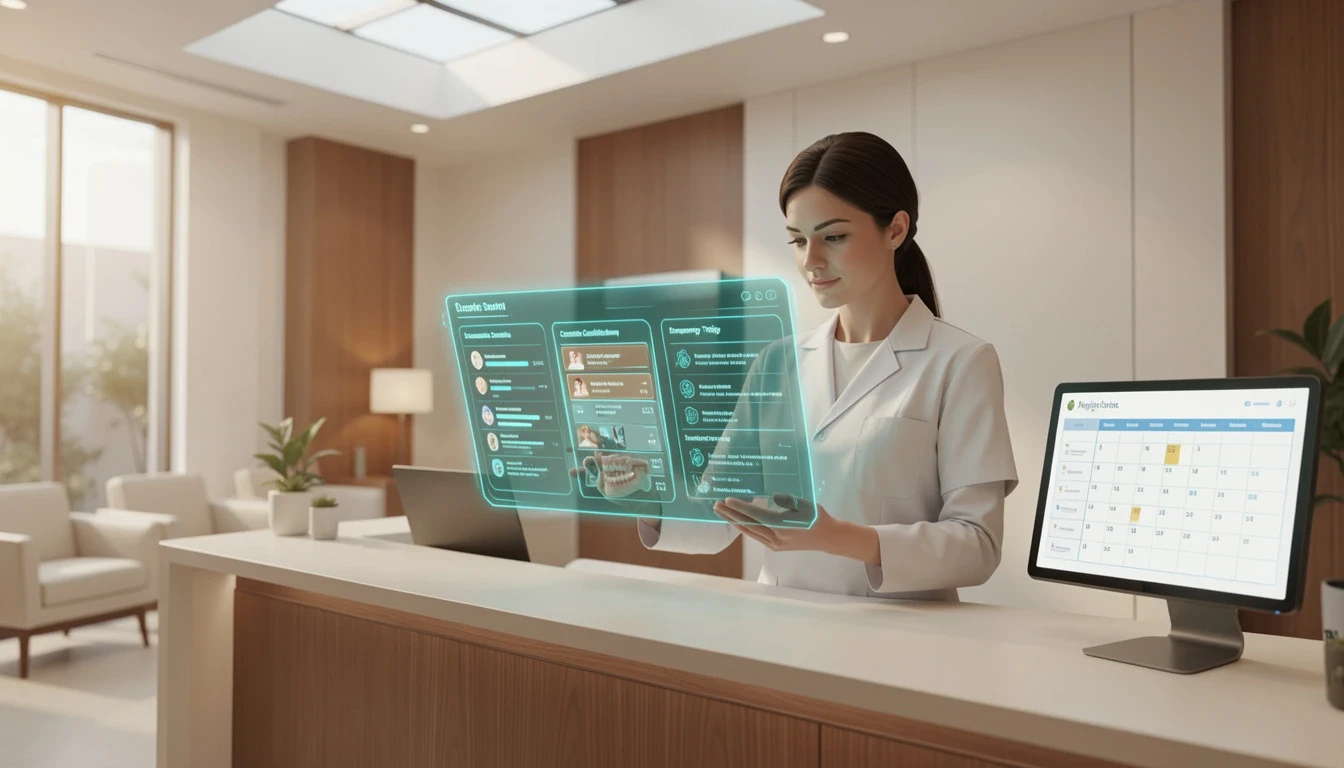
Article Summary: This article explains the three revenue challenges unique to dental practice phone management: a broken recall system that lets patients lapse silently, high-value cosmetic consultation calls that go to voicemail while the treatment coordinator is with a patient, and dental emergencies after hours that require immediate human contact. It maps seven dental-specific call types against urgency levels and AI handling protocols, quantifies the annual revenue loss from an incomplete recall programme, and presents AI phone agents as a practical system for automating recall outreach, capturing every cosmetic inquiry, and triaging dental emergencies 24/7. Includes a call type triage table, recall revenue impact table, realistic multi-dentist case study, full comparison table, and step-by-step implementation guide.
Key Highlights
• The 6-month hygiene recall system is the revenue engine of every dental practice - and most practices contact fewer than half of their due patients each month, silently losing hundreds of thousands of dollars per year to patient lapse.
• Cosmetic dentistry consultation inquiries - Invisalign, veneers, implants, whitening - are among the highest-value calls any dental practice receives. The first practice to answer and offer a consultation typically wins the case.
• Dental emergency calls that reach voicemail after hours are not just a revenue problem - they are a patient care failure. Every dental emergency needs a clear pathway to help, not an invitation to leave a message.
• Dental anxiety is a documented psychological phenomenon affecting a significant share of the adult population. When a dental-anxious patient finally works up the courage to call, the tone and responsiveness of that first contact often determines whether they book or abandon the idea of treatment.
• AI phone agents handle all administrative call types 24/7 - new patient inquiries, recall booking, insurance FAQs, cosmetic consultations, and post-treatment follow-up - while routing true dental emergencies to the on-call dentist immediately.
• Automated AI recall outreach contacts 100% of due patients every month without consuming front desk staff time, systematically closing the recall gap that costs most practices six figures annually.
• Dental practices in Europe and the US that implement voice AI report measurable improvements in new patient acquisition, recall completion rates, and cosmetic case acceptance.
Table of Contents
• The Three Revenue Problems Every Dental Practice Has with Its Phone
• The Broken Recall System: Dentistry's Most Expensive Hidden Problem
• The Dental Anxiety Caller: Why First Contact Changes Everything
• The Seven Types of Inbound Calls Every Dental Practice Handles
• The Annual Revenue Cost of an Incomplete Recall Programme
• The Cosmetic Consultation Opportunity: High Value, High Competition
• 7 Ways AI Phone Agents Transform Dental Clinic Operations
• Case Study: A Multi-Dentist General and Cosmetic Practice
• Traditional Front Desk vs. AI Phone Agent: Side-by-Side Comparison
• HIPAA and Data Privacy for Dental AI Phone Systems
• How to Implement Voice AI at Your Dental Practice
• Common Mistakes Dental Practices Make with Call Management
• Best Practices for Dental Clinic Voice AI
• Future Trends: AI in Dental Patient Communication
• Frequently Asked Questions
• Conclusion
Introduction
A patient who had not visited a dentist in three years finally decides to call. She has been putting it off - partly the cost, partly the memory of a difficult extraction years ago, partly just life getting in the way. She checks Google, finds a well-reviewed practice near her office, and dials at 8:45 AM on a Tuesday.
The phone rings seven times. Voicemail. She hangs up and does not call back.
Two weeks later, the practice's treatment coordinator spends an afternoon calling through a stack of lapsed recall cards. One of them has that patient's name. She leaves a message. It is never returned.
Multiply that scenario by the hundreds of patients who were due for recall last month and were not contacted - and by the cosmetic consultation callers who rang while the receptionist was handling a check-in, and by the emergency patient who called at 6 PM on a Friday and got voicemail - and the scale of the phone management problem at most dental practices becomes clear.
This article addresses all three of those problems directly. It explains why the recall system is the most expensive administrative failure in dental practice management, why cosmetic inquiry calls are won or lost in the first 30 seconds, and how AI phone agents handle every category of dental call - 24 hours a day - without adding headcount or compromising the patient experience.
The Three Revenue Problems Every Dental Practice Has with Its Phone
Most dental practice owners are aware that their phone management is imperfect. What they often do not fully appreciate is how much it costs them - and that the cost comes from three distinct mechanisms, each operating independently.
Problem 1: The Recall System Completes at Half Capacity
Every dental practice runs on a 6-month hygiene recall cycle. Every patient who gets a cleaning is supposed to come back in six months. A practice with 1,200 active patients needs to contact 200 of them every month. Most practices, relying on staff to make recall calls between other tasks, complete somewhere between 40% and 60% of those contacts each month. The rest go uncontacted. Many of those patients simply drift away.
Problem 2: Cosmetic Callers Book with Whoever Answers First
A patient researching Invisalign or dental implants in their area will call two or three practices. They are ready to book a consultation. They go to the first practice that answers, sounds professional, and can offer them an appointment. If the first practice goes to voicemail, they call the next one. A missed cosmetic consultation call is not just a missed appointment - it is a missed $4,000 to $8,000 case, plus the lifetime value of a patient who now belongs to a different practice.
Problem 3: Dental Emergencies After Hours Have Nowhere to Go
Dental emergencies do not respect business hours. A broken tooth on Saturday afternoon, a severe toothache on Sunday evening, a lost crown the night before an important event - these situations create urgent, stressed callers who need help immediately. When they reach voicemail, they go to an emergency dental service, a hospital emergency department, or simply suffer until they can find a practice that picks up. The emergency is a lost patient relationship and a serious patient care failure.
The Broken Recall System: Dentistry's Most Expensive Hidden Problem
The 6-month hygiene recall is the lifeblood of a dental practice. It keeps the hygiene schedule full, it surfaces restorative treatment needs through regular clinical contact, and it builds the long-term patient relationships that drive case acceptance and word-of-mouth referrals. When it works, it is the most reliable revenue engine a dental practice has.
When it does not work - which is most of the time - it becomes the practice's largest and least visible revenue leak.
Here is how the breakdown typically happens. The front desk coordinator has a stack of recall cards or a list of due patients in the practice management software. She works through the list when she has time. But phone calls arrive. Patients check in. Insurance verifications need to be completed. Appointment confirmations for tomorrow need to go out. By the end of the day, she has made 40 of the 60 recall calls she planned. The remaining 20 get carried over. And carried over again.
After three months of uncontacted recall, a meaningful percentage of those patients have mentally moved on. They have not changed dentists - they just have not booked. When the practice finally calls, they may not answer. The lapse has begun.
An AI phone agent running a systematic recall programme contacts every due patient every month, without exception. It calls from the practice number, introduces itself as the clinic's automated recall system, and offers to book the appointment directly. Patients who want to book immediately do so. Patients who prefer to call back know exactly who to call. Patients who cannot be reached get a follow-up call the next week. No patient falls through the gap because a front desk coordinator ran out of time.
The Dental Anxiety Caller: Why First Contact Changes Everything
Dental anxiety is one of the most well-documented phenomena in healthcare psychology. Studies consistently find that a significant percentage of adults experience meaningful anxiety about dental visits, and that many of them delay or avoid seeking care as a result. The precise prevalence varies across studies and populations, but it is broadly accepted in dental and psychological literature that a substantial share of the adult population has some degree of dental-related fear or anxiety.
For a dental practice, this has a direct operational implication: some of the most valuable new patients to acquire are also the most likely to be deterred by a poor first contact experience.
When a dental-anxious patient finally works up the courage to call a practice, they are often in a heightened emotional state. If the phone rings repeatedly and goes to voicemail, they take it as a signal. If the receptionist who answers sounds rushed or distracted, the patient reads it as an indication of how the practice treats patients generally. If they are put on hold immediately, many will hang up and not call back.
An AI phone agent configured for a dental practice with appropriate warmth and patience offers a counterintuitive advantage in this context: it is never rushed, never distracted, and never sighs. It answers immediately, acknowledges the patient's reason for calling calmly, and moves efficiently through the booking process without any of the social cues that can heighten anxiety in a vulnerable caller.
For a practice that has invested in anxiety-sensitive care - sedation dentistry, a calm clinical environment, a reputation for treating nervous patients - the AI phone agent's consistent, unhurried tone is a natural extension of that positioning from the very first second of contact.
The Seven Types of Inbound Calls Every Dental Practice Handles
Dental practices receive a more varied range of inbound call types than most healthcare businesses, spanning routine scheduling, emergency triage, high-value cosmetic inquiries, and complex treatment plan discussions. The table below maps all seven against their urgency level, what the AI handles, and when the call is routed to clinical or administrative staff.
Call Type | Urgency Level | AI Phone Agent Handles | Routes to Clinical Staff When |
New Patient - General Inquiry | Low - Administrative | Captures name, contact details, insurance plan, reason for seeking a dentist, and preferred appointment times; books new patient exam or schedules callback | Patient describes acute pain or dental emergency during the inquiry call; clinical staff assesses urgency and schedules accordingly |
Cosmetic Consultation Inquiry (Invisalign, Veneers, Implants, Whitening) | Low - High Commercial Value | Captures treatment interest, timeline, budget awareness, and contact details; books a dedicated cosmetic consultation or schedules dentist callback for complex cases | Patient has specific clinical questions about suitability, medical history interactions, or existing restorations that require dentist assessment before booking |
Dental Emergency | High - Urgent | Gathers nature of emergency (pain, broken tooth, lost restoration, swelling), onset time, and contact details; applies triage logic to determine severity and response pathway | Always for pain emergencies - AI provides immediate guidance and escalates to on-call dentist or emergency contact line based on pre-configured urgency protocol |
Recall / Hygiene Appointment | Low - Routine Scheduling | Books or confirms hygiene recall appointment; handles reschedule requests; adds to wait-list; logs patient preference for morning, afternoon, or specific hygienist | Patient mentions specific gum or tooth concern since last appointment that should be noted for the hygienist before the visit |
Insurance and Benefits Query | Low - Administrative | Confirms whether the practice accepts the patient's specific insurance plan; provides general information about annual maximums, coverage for common procedures, and self-pay rates from the pre-loaded knowledge base | Patient has a complex pre-authorization question, a coverage dispute, or is asking about a specific treatment plan and whether their plan will cover it in full |
Post-Treatment Follow-Up | Low to Medium | Captures nature of concern; provides pre-configured post-procedure guidance for common issues (mild soreness, sensitivity, dietary restrictions); logs and schedules callback for anything outside expected recovery | Patient describes symptoms inconsistent with normal post-treatment recovery, reports significant pain, swelling, or other concern requiring clinical assessment |
Treatment Plan / Case Acceptance Follow-Up | Medium - Revenue-Critical | Logs the patient's questions or decision status; schedules a call with the treatment coordinator or dentist; provides general financing information if pre-loaded in the knowledge base | Patient has specific clinical questions about the proposed treatment, wants to discuss alternative approaches, or requires the dentist to walk through the treatment plan again |
The triage table above makes an important distinction visible: only dental emergencies and calls involving specific clinical questions require routing to clinical staff. The remaining five call types - covering the large majority of a dental practice's inbound call volume - can be handled entirely by the AI, freeing the front desk and treatment coordination team for the tasks that require their direct involvement.
The Annual Revenue Cost of an Incomplete Recall Programme
Most dental practice owners underestimate how much their recall system is costing them, because the revenue impact is invisible. Patients who were not contacted and did not rebook do not appear on any report as a lost patient. They simply are not there. The revenue gap only becomes apparent when the hygiene schedule starts showing more open slots than expected.
The table below quantifies the annual revenue impact of a recall programme that contacts only half of its due patients each month. All figures are illustrative - the actual impact depends on the practice's patient base size, average patient value, and recall completion rate.
Metric | Calculation | Result |
Active patient base | 1,200 patients | 1,200 patients |
Monthly recall due (6-month cycle) | 1,200 / 6 | 200 patients/month |
Current manual recall completion rate (illustrative) | 50% of due patients successfully contacted | 100 contacted |
Patients not contacted per month | 200 - 100 | 100 not contacted |
Lapse rate among uncontacted patients | 25% do not rebook within 3 months of recall due | ~25 lapsed/month |
Average annual patient value (hygiene + treatment) | $550 | — |
Monthly lapsed patient revenue | 25 x $550 | $13,750/month |
Annual revenue lost to recall system gaps | $13,750 x 12 | $165,000/year |
Note: These figures are illustrative. Average annual patient value varies significantly by practice type, case mix, and geography. A general dental practice with a high restorative volume may have a higher per-patient value; a hygiene-only practice will have a lower one. Manual recall completion rates vary; some practices perform better than 50%, others worse. Use your own data for a practice-specific picture.
The $165,000 annual figure in the table above applies to a practice of 1,200 active patients with a 50% recall completion rate. Scale this to a larger practice - 2,000 active patients, a 40% recall completion rate, and a higher case mix value - and the annual recall revenue gap can exceed $300,000.
The calculation also underestimates the true cost, because it only captures the first year of lost patient value. A patient who lapses and does not return is lost for multiple future hygiene visits and the restorative treatment those visits would have generated. The lifetime value of a patient who is not recalled is considerably larger than a single year's average spend.
The Cosmetic Consultation Opportunity: High Value, High Competition
The market for cosmetic dental treatments has grown substantially over the past decade. Patient awareness of Invisalign, composite veneers, porcelain veneers, dental implants, and professional whitening is high, driven by social media, direct-to-consumer advertising from treatment brands, and the increasing social expectation of aesthetic dental care.
This creates a high-value, high-competition inquiry environment. A patient researching Invisalign has typically seen advertising, done some research on cost, and decided they want to find out more. They call one or two or three local providers. The practice that answers, communicates confidence and expertise in the first 60 seconds, and offers a convenient consultation appointment wins the case. The practices that go to voicemail or have their receptionist stumble through a question about Invisalign pricing do not.
For a practice with an active cosmetic offering, the math of a missed cosmetic consultation call is stark:
• Average Invisalign comprehensive case value: approximately $5,000-$7,000
• Average composite veneer case (6-8 teeth): approximately $3,000-$5,000
• Average porcelain veneer case (6-10 teeth): approximately $9,000-$18,000
• Average implant case (single tooth): approximately $3,500-$6,000
If a dental practice misses three cosmetic consultation inquiry calls per month - a conservative figure for any practice running active cosmetic marketing - that is three potential cases that are now at a competing practice. At an average case value of $5,000, that is $15,000 per month, or $180,000 per year, in cases that were actively seeking out treatment and called the practice to get it.
An AI phone agent that answers every cosmetic inquiry call immediately, confirms the practice's cosmetic offering with confidence, and books a dedicated consultation appointment converts a call that would otherwise have gone to voicemail into a booked case in the schedule.
7 Ways AI Phone Agents Transform Dental Clinic Operations
A dental practice AI phone agent is not a general answering service. It is a system built around the specific call types, urgency thresholds, and patient communication needs of a dental practice. Here is what it does across the seven highest-impact use cases.
1. 24/7 New Patient and Cosmetic Inquiry Capture
New dental patients and cosmetic consultation seekers do not limit their research to business hours. Evening and weekend Google searches for local dentists or Invisalign providers generate inquiry calls at precisely the times when most dental practice front desks are closed.
An AI phone agent answers every new patient and cosmetic inquiry call immediately. For general new patient inquiries, it gathers the caller's name, contact details, insurance plan, and reason for seeking a new dentist, then books a new patient examination appointment directly. For cosmetic consultations, it gathers the treatment the patient is interested in, their timeline, and any relevant background, then books a dedicated cosmetic consultation slot or schedules a callback with the treatment coordinator.
The competitive advantage is direct: a patient who calls three practices on a Sunday evening and reaches an AI at the first one that answers - books a consultation, receives a confirmation, and moves on - is no longer available to the other two practices when their receptionists arrive on Monday morning.
2. Automated 6-Month Recall Outreach
This is the highest-return AI application for most dental practices, and the one most directly unique to dentistry. An AI phone agent integrated with the practice management software runs a systematic recall programme that contacts every patient who is due for a hygiene appointment in the current month.
The outbound recall call is brief and professional. The AI identifies itself as calling from the practice's patient care team, notes that the patient is due for their six-month hygiene visit, and offers to book a convenient appointment. If the patient answers and is ready to book, the appointment is confirmed in real time. If the patient does not answer, the AI leaves a clear, friendly voicemail and schedules a follow-up call for the following week.
For lapsed patients - those who have not been in for more than nine or twelve months - the AI can use a slightly different script that acknowledges the gap warmly and without judgment, and focuses on getting them back in the door. This judgment-free re-engagement is especially effective for patients who felt embarrassed about not coming in and were avoiding the call.
The result is a recall completion rate that approaches 100% of due patients contacted every month, compared to the 40-60% that most practices achieve manually. The hygiene schedule fills consistently. Restorative treatment needs are identified through regular clinical contact. And the revenue that was quietly leaking through an incomplete recall programme stays within the practice.
3. Dental Emergency Call Handling and Triage
Dental emergencies carry a particular emotional charge. A patient with a broken front tooth, a throbbing abscess, or a crown that fell out the night before a wedding is scared, in pain, and needs help immediately. If they reach voicemail, their experience of the practice begins with abandonment. They will find an emergency dental service, and they will likely not return.
An AI phone agent handles dental emergency calls through a structured triage protocol. The caller describes their situation, and the AI gathers the nature of the emergency - the type of pain or damage, when it started, and whether there is any swelling or fever - and applies the practice's pre-configured triage logic.
For non-life-threatening emergencies that can wait until the next morning, the AI provides reassurance, appropriate temporary care guidance where configured, and confirms that the dentist will call the patient first thing when the practice opens. For urgent situations - significant swelling that may indicate infection, uncontrolled bleeding, or other time-sensitive concerns - the AI immediately alerts the on-call dentist via SMS and provides the patient with the on-call contact number. For true dental emergencies that require hospital care, the AI provides clear guidance to seek emergency services.
This triage logic means that patients always reach a response, emergencies always escalate immediately, and the on-call dentist is only contacted for situations that genuinely cannot wait until morning.
4. Insurance and Benefits FAQ Handling
Dental insurance questions are among the most time-consuming and most repetitive calls a dental front desk receives. Which plans does the practice accept? Is treatment X covered under Plan Y? What is the annual maximum? Does the practice participate as an in-network provider?
These questions all have defined answers that exist in the practice's operational documentation. An AI phone agent pre-loaded with the practice's complete insurance participation list and standard FAQ responses can answer all of them accurately, immediately, and at any hour.
For practices that accept a large number of insurance plans - which is common in private general dental practice - the insurance FAQ volume can consume a significant share of front desk call time each day. Shifting this to the AI recovers that time for patient-facing interactions that require human judgment and interpersonal skill.
5. Appointment Confirmation and No-Show Reduction
Dental appointment no-shows are costly for two reasons. The appointment slot is lost - the dentist or hygienist's time is not billable. And the patient who no-shows has not received care they need, which may result in a worse clinical outcome and reduced confidence in the practice.
An AI phone agent places automated confirmation calls one to two days before every appointment. The patient receives the appointment details, is asked to confirm or reschedule, and can take either action within the same call. Patients who reschedule early free up the slot for the wait-list. Patients who confirm are more likely to attend.
For practices with longer appointment lead times - orthodontic consultations, implant planning appointments, full arch cases - confirmation outreach further in advance may also reduce the late cancellation rate that is particularly costly for time-intensive procedures.
6. Post-Treatment Follow-Up and Patient Retention
A brief follow-up call a day or two after a significant dental procedure - a filling, an extraction, a crown fit, a first aligner tray - has a measurable effect on patient satisfaction and practice loyalty. The patient feels cared for. If they are experiencing something unexpected, they have a channel to report it before it becomes a clinical concern. And if they need to book a follow-up appointment, the AI can do that immediately.
For cosmetic treatment patients - who have often made a significant financial and emotional investment in their treatment - the post-procedure follow-up call also creates a natural opportunity to ask for a review or a referral, at the moment when satisfaction is highest.
An AI phone agent that makes every post-treatment follow-up call systematically turns a sporadic courtesy into a standard part of every patient's experience. The practice reputation benefit from this kind of consistent care communication is significant and compounds over time through reviews and word-of-mouth.
7. Treatment Plan Follow-Up and Case Acceptance Support
One of the most revenue-critical moments in a dental practice's patient communication cycle is the window between a treatment plan presentation and the patient's decision to proceed. Patients who are considering a significant investment - an implant, a full veneer case, a course of Invisalign treatment - often need a few days to think. They may have questions. They may need to discuss it with a partner. They may be weighing financing options.
If the practice does not follow up, many of these patients simply do not come back. Not because they decided against the treatment - but because the momentum of the decision faded, and no one reached out to keep it alive.
An AI phone agent that places a structured follow-up call three to five days after a treatment plan presentation - asking whether the patient has any questions, providing financing information if configured, and offering to book the first appointment - maintains that momentum without requiring the treatment coordinator to remember to call every pending case manually. For a practice with a high volume of cosmetic treatment plans, this systematic follow-up can meaningfully improve case acceptance rates.
Case Study: A Multi-Dentist General and Cosmetic Practice
Practice profile: A four-surgery dental practice with two general dentists and one dentist specializing in cosmetic and restorative work, supported by two dental hygienists and two treatment coordinators. The practice has 1,400 active patients on a 6-month recall cycle and a growing cosmetic offering including Invisalign, composite and porcelain veneers, and single-tooth implants. Average hygiene visit value is approximately $180; average restorative and cosmetic case value is approximately $2,400.
The problems identified:
• Recall outreach was completing at approximately 45% of due patients per month. The remaining 55% were receiving no contact and rebooking at much lower rates, resulting in an increasingly sparse hygiene schedule during certain months.
• Cosmetic consultation inquiry calls - driven by an active Instagram and Google Ads presence - were converting poorly during peak hours because the front desk was occupied with check-ins and insurance processing. An estimated 20-25% of cosmetic inquiry calls were going to voicemail during busy morning periods.
• Dental emergency calls after hours were going entirely to voicemail. The practice had no after-hours protocol. At least two patients confirmed having used an emergency dental service over the prior six months because they could not reach the practice.
• Treatment plan follow-up was inconsistent. The two treatment coordinators followed up on pending cases when they had time, but with four dentists and two hygienists generating treatment plans daily, many cases were not followed up within the ideal 3-5 day window.
The solution deployed:
VoxietyAI configured an AI phone agent covering all seven call types. Outbound recall calls run automatically from the practice management system's due patient list every Monday, with follow-up calls for non-answers the following week. Cosmetic inquiry calls are handled by a dedicated AI script that confirms the practice's cosmetic offering, captures the patient's treatment interest, and books a consultation appointment or schedules a callback with the cosmetic dentist. After-hours emergency calls are triaged by the AI and escalated to the on-call dentist via SMS for urgent situations. Treatment plan follow-up calls are placed automatically on day 3 after a plan presentation for any case above a configured value threshold.
Results after the first full quarter with AI phone coverage:
• Recall completion rate: Increased from approximately 45% to near 100% of due patients contacted each month; hygiene schedule occupancy improved meaningfully
• Cosmetic consultation bookings: Increased during the first quarter compared to the same period the prior year; the practice attributed the improvement in part to after-hours and peak-hour inquiry capture
• After-hours emergency handling: Two urgent after-hours escalations in the first quarter, both handled within 20 minutes of the patient call; zero patients reported to an emergency dental service during the period
• Treatment plan case acceptance: Measurably improved for cases above the configured value threshold that received systematic AI follow-up calls within the 3-5 day window
• Front desk recall call time: Reduced substantially; the team's daily outbound call task was eliminated, recovering approximately 90 minutes of coordinator time per day during recall-heavy weeks
Note: These results reflect a realistic scenario representative of outcomes dental practices can expect from implementing voice AI. Individual results depend on practice size, case mix, existing recall completion rates, and system configuration.
Traditional Front Desk vs. AI Phone Agent: Side-by-Side Comparison
Function | Traditional Front Desk | AI Phone Agent |
Call Hours | Business hours only | 24/7 including evenings and weekends |
New Patient Inquiry Capture | Missed when desk is occupied | Captured every time with full profile |
Cosmetic Consultation Booking | Manual; first-come first-served | Booked immediately, 24/7 |
Recall Outreach Programme | Partial; staff call when time permits | 100% of due patients contacted automatically |
Dental Emergency Triage | After-hours = voicemail | Immediate triage + on-call dentist alert |
Insurance FAQ Volume | Manual; repeated daily | AI answers from pre-loaded knowledge base |
Appointment Confirmation Calls | Outbound calls by reception | Automated AI outbound confirmations |
Treatment Plan Follow-Up Calls | Treatment coordinator when available | AI captures status; schedules coordinator call |
Dental Anxiety Caller Experience | Variable by who answers | Consistent, warm, patient tone every call |
Lapsed Patient Re-engagement | Ad hoc or postcard campaigns | Systematic AI outbound recall + re-activation |
HIPAA and Data Privacy for Dental AI Phone Systems
Dental practices in the United States are covered entities under HIPAA. Patient information gathered during a call - including name, date of birth, treatment details, and insurance information - constitutes protected health information (PHI). Any AI phone system that handles this information on behalf of a dental practice must operate under a signed Business Associate Agreement (BAA) with the AI vendor. Practices in the European Union and UK must also comply with applicable data protection regulations (GDPR and UK GDPR) when implementing any patient communication technology.
Before deploying any AI phone system at a dental practice, practice managers should:
• Confirm that the AI vendor is willing to sign a BAA prior to deployment
• Verify that patient data captured by the AI is stored and transmitted in compliance with HIPAA's Privacy and Security Rules
• Consult the practice's legal counsel or compliance advisor before going live
• Include the AI phone system in the practice's annual HIPAA risk assessment
• For EU or UK practices, review the deployment against GDPR requirements with a data protection advisor
Compliance note: This section provides general informational guidance and does not constitute legal or compliance advice. Dental practices should always consult qualified legal counsel or a HIPAA compliance advisor before implementing any patient communication technology.
How to Implement Voice AI at Your Dental Practice
A dental practice AI phone agent has two distinct components that require separate setup: the inbound call handling system and the outbound recall programme. Both must be configured correctly before going live. Here is a step-by-step guide.
Step 1: Confirm your vendor signs a BAA. Before any configuration begins, execute a signed BAA with your AI provider. In the US, this is a legal requirement. In the EU and UK, confirm your data processing agreement covers the relevant GDPR obligations.
Step 2: Map your seven inbound call types against your practice's protocols. Using the triage table in this article as a framework, define your practice-specific responses for each call type. What does a cosmetic consultation call capture? What is the dental emergency escalation pathway? Which insurance plans does the AI confirm? These answers come from your existing protocols, not from the AI vendor.
Step 3: Build your practice knowledge base. Document everything the AI needs to answer accurately: every insurance plan you accept, your new patient examination fee and cosmetic consultation fee, your emergency contact protocol, pre-appointment preparation instructions for common procedures, and the details of each cosmetic treatment you offer. This knowledge base is the foundation of all FAQ responses.
Step 4: Configure the dental emergency triage logic with clinical input. The emergency triage pathway must be reviewed and approved by a dentist before going live. Define exactly which symptom descriptions trigger immediate on-call escalation, which can wait until morning, and what the AI should say to each category of emergency caller.
Step 5: Integrate with your practice management software for recall. The outbound recall programme requires access to your patient database and appointment history. Your practice management software (Dentrix, Eaglesoft, Curve, or equivalent) should be connected to the AI system so that due patient lists are accurate and appointment booking is reflected in real time.
Step 6: Design and test your recall call script. The recall call script should be warm, brief, and immediately bookable. Test it by having team members call the AI from a patient perspective. Listen for anything that feels awkward, over-scripted, or unclear. Test the lapsed patient re-engagement script separately - it should feel particularly warm and judgment-free.
Step 7: Run a full pre-launch test across all call types. Test every scenario in the triage table before going live: a new patient inquiry, a cosmetic consultation call, a dental emergency at different urgency levels, a recall booking, an insurance FAQ, a post-treatment concern, and a treatment plan follow-up. Involve a dentist in reviewing the emergency triage test calls.
Step 8: Monitor actively for the first 60 days. Review call transcripts and booking data weekly in the first two months. Track cosmetic consultation capture rates, recall completion rates, and emergency escalation accuracy. Adjust scripts where needed before treating the configuration as final.
Common Mistakes Dental Practices Make with Call Management
These are the most common errors dental practices make when managing their phone systems - with or without AI.
Running the recall programme from memory rather than a system. Front desk staff who call recall patients when they remember to, or when the schedule looks sparse, will never achieve consistent contact rates. Recall outreach must be systematic - same week every month, every patient - or it will always underperform.
Treating all after-hours calls as equivalent. A recall reminder call at 7 PM and a dental emergency call at 7 PM are not the same thing. A voicemail system that handles both the same way fails one of them. After-hours call handling must distinguish between routine and emergency situations.
Not having a specific cosmetic consultation script. A cosmetic inquiry caller who reaches a general appointment booking flow and is asked to "book a new patient exam" is not getting the experience they expected. Cosmetic consultation calls need a dedicated intake flow that validates the practice's cosmetic expertise, confirms the treatment the patient is interested in, and books the right appointment type.
Failing to follow up on pending treatment plans. Treatment plan acceptance rates are closely tied to follow-up speed and consistency. A patient who was presented with a $6,000 veneer case and did not hear from the practice for a week has had time to talk themselves out of it. Systematic follow-up within 3-5 days is not a nice-to-have - it is a case acceptance strategy.
Using a generic AI voice that does not match the practice's brand. A luxury cosmetic dental practice that has invested in premium waiting room finishes, high-end patient communication materials, and a reputation for discretion should not deploy a clinical, robotic-sounding AI. The AI's tone, vocabulary, and pacing must match the practice's brand positioning.
Best Practices for Dental Clinic Voice AI
These practices consistently improve outcomes for dental practices that implement AI phone agents:
• Run recall outreach on a fixed weekly schedule, not reactively. Set the AI to pull the due patient list every Monday and begin outreach calls from Tuesday onward. Consistency is what makes recall programmes effective.
• Use a warm, judgment-free script for lapsed patient outreach. Patients who have not been in for 12, 18, or 24 months often feel guilty about the gap. A script that acknowledges the time without criticism and focuses on getting them back in immediately - not on why they stayed away - converts more re-engagement calls to appointments.
• Configure a dedicated script and appointment type for each cosmetic treatment. Invisalign consultation calls need a different script from implant inquiry calls. The AI should confirm the treatment, the practice's relevant expertise, and book the right appointment type, not a generic new patient slot.
• Set a 20-minute on-call dentist response target for AI-escalated dental emergencies. When the AI flags an urgent emergency, the on-call dentist should call the patient back within 20 minutes. This response standard should be agreed and documented before go-live.
• Review recall completion data monthly alongside hygiene schedule occupancy. These two numbers should move together. If recall completion is up but schedule occupancy is not, the AI recall script may not be converting contacts to booked appointments effectively and should be revised.
• Localise language and tone for European and UK practices. Dental AI phone agents for practices in Germany, the Netherlands, or the UK should use market-appropriate language, reference local insurance structures (gesetzliche Krankenversicherung, NHS vs. private, etc.), and be configured in the correct language for the patient population.
Future Trends: AI in Dental Patient Communication
The application of AI to dental patient communication is evolving faster than most practice owners expect. Here is where the technology is heading.
AI-driven orthodontic and cosmetic treatment matching. Future AI systems will be able to conduct a more detailed pre-consultation assessment during the inquiry call - gathering clinical information that helps the dentist prepare for the cosmetic or orthodontic consultation more effectively. The AI will not make clinical recommendations, but it will provide structured information that makes the consultation more efficient.
Predictive recall and lapse modelling. AI will increasingly analyse patient appointment history, engagement patterns, and demographic data to predict which patients are at highest risk of lapsing before they miss a recall. Proactive outreach to at-risk patients - before the recall window passes - will reduce lapse rates further than reactive recall calls alone.
Integrated treatment financing support. During treatment plan follow-up calls, AI agents will present financing options in real time, collect initial application information, and connect patients with the practice's financing partner - removing a friction point that currently delays or prevents case acceptance for patients who need a payment plan.
Multilingual patient outreach at scale. Dental practices serving linguistically diverse communities will use AI to run recall outreach in the patient's preferred language automatically - improving contact rates among non-English-speaking patient populations who are currently underserved by English-only recall programmes.
Voice AI for patient education and anxiety reduction. Pre-appointment AI calls will deliver condition-specific patient education - explaining what to expect from a root canal, how a dental implant procedure works, or what Invisalign treatment involves - in a calm, accessible voice that helps reduce dental anxiety before the patient arrives at the practice.
Practices that build their AI phone infrastructure now will have a tuned system ready to integrate these capabilities as they become available - with recall programmes already running automatically and patient communication standards already established.
Frequently Asked Questions
Can an AI phone agent handle a dental emergency call appropriately, or will it just take a message?
A well-configured dental emergency AI triage system does considerably more than take a message. It gathers structured information about the emergency - the type of pain or damage, when it started, whether there is swelling or fever, and the patient's contact details - and applies pre-configured triage logic to categorise the urgency. For non-life-threatening situations that can wait until morning, the AI provides reassurance, optional temporary care guidance where configured, and confirms the practice will call back at opening. For urgent situations - significant facial swelling, signs of dental abscess, or concerns that may indicate infection spreading beyond the tooth - the AI alerts the on-call dentist by SMS immediately and provides the patient with the on-call contact number. For situations that require emergency services, the AI provides that guidance directly. The triage logic must be designed with clinical input from a dentist before the system goes live.
How does AI patient recall outreach work in practice, and does it actually convert patients to appointments?
An AI recall outreach system integrates with the practice management software to identify patients who are due for their hygiene appointment in the current month. It places outbound calls from the practice's number, introduces itself as calling from the patient care team, notes that the patient is due for their six-month check-up, and offers to book a convenient time. If the patient answers and wants to book, the appointment is confirmed in real time and added to the schedule. If the patient does not answer, a professional voicemail is left with a callback number and a follow-up call is placed the following week. Conversion rates from AI recall calls to booked appointments depend on the patient relationship with the practice and the quality of the script, but any practice running a systematic AI recall programme will contact more due patients than it currently does manually - and more contacts produce more booked hygiene appointments.
Will dental patients accept speaking with an AI when calling their dentist's practice?
Patient acceptance of AI in healthcare communication has grown steadily and is generally higher than practice owners expect, particularly for administrative tasks such as appointment booking, insurance queries, and recall confirmation. Patients calling to book an appointment or confirm their insurance coverage are not expecting a clinical conversation - they want a quick, accurate, professional interaction. An AI that delivers that, immediately and without hold time, is experienced positively by most callers. The most important factor is the AI's voice quality and tone, which should be warm and natural rather than robotic. For patients who explicitly prefer to speak with a human, the AI should always offer a clear option to transfer or receive a callback from a team member. Dental emergency callers should always reach a human escalation pathway within the interaction.
Conclusion
The phone is the revenue engine of a dental practice, and most practices are running it at half capacity. The recall programme contacts only a fraction of due patients. Cosmetic consultation inquiries go to voicemail while the receptionist handles check-ins. After-hours dental emergencies reach an answering machine and patients go elsewhere. Treatment plans are presented and then left to go cold because the follow-up call did not happen within the right window.
AI phone agents close all four of those gaps simultaneously. They run the recall programme to completion every month without exception. They answer every cosmetic inquiry call with the knowledge and warmth the case deserves. They triage every after-hours emergency and escalate the urgent ones immediately. And they follow up on every pending treatment plan within the window when case acceptance is highest.
The result is a hygiene schedule that stays full, a cosmetic caseload that reflects the practice's actual treatment capability, and a patient communication standard that builds loyalty and drives word-of-mouth referrals.
If your practice is ready to see what a fully configured dental AI phone system looks like - including recall automation, cosmetic inquiry handling, and after-hours emergency triage - VoxietyAI can walk you through a setup designed specifically for your practice type and patient population. Book a discovery call today.
Suggested External Sources (US and European)
https://www.ada.org/ (American Dental Association - dental practice resources and statistics)
https://www.mgma.com/ (Medical Group Management Association - practice management benchmarks)
https://www.eadph.org/ (European Association of Dental Public Health)
https://www.hhs.gov/hipaa/for-professionals/privacy/index.html (US HHS HIPAA Privacy Rule)
https://gdpr.eu/ (GDPR compliance guidance for European dental practices)
https://www.salesforce.com/blog/digital-customers-research-blog/