Article
Dec 10, 2025
AI Phone Agents for Exhibition Booth & Display Companies: Win More Clients During Trade Show Season
Exhibition booth companies miss critical client calls during peak trade show season. AI phone agents capture every RFQ inquiry, automate lead intake, and book consultations 24/7. Here is how.
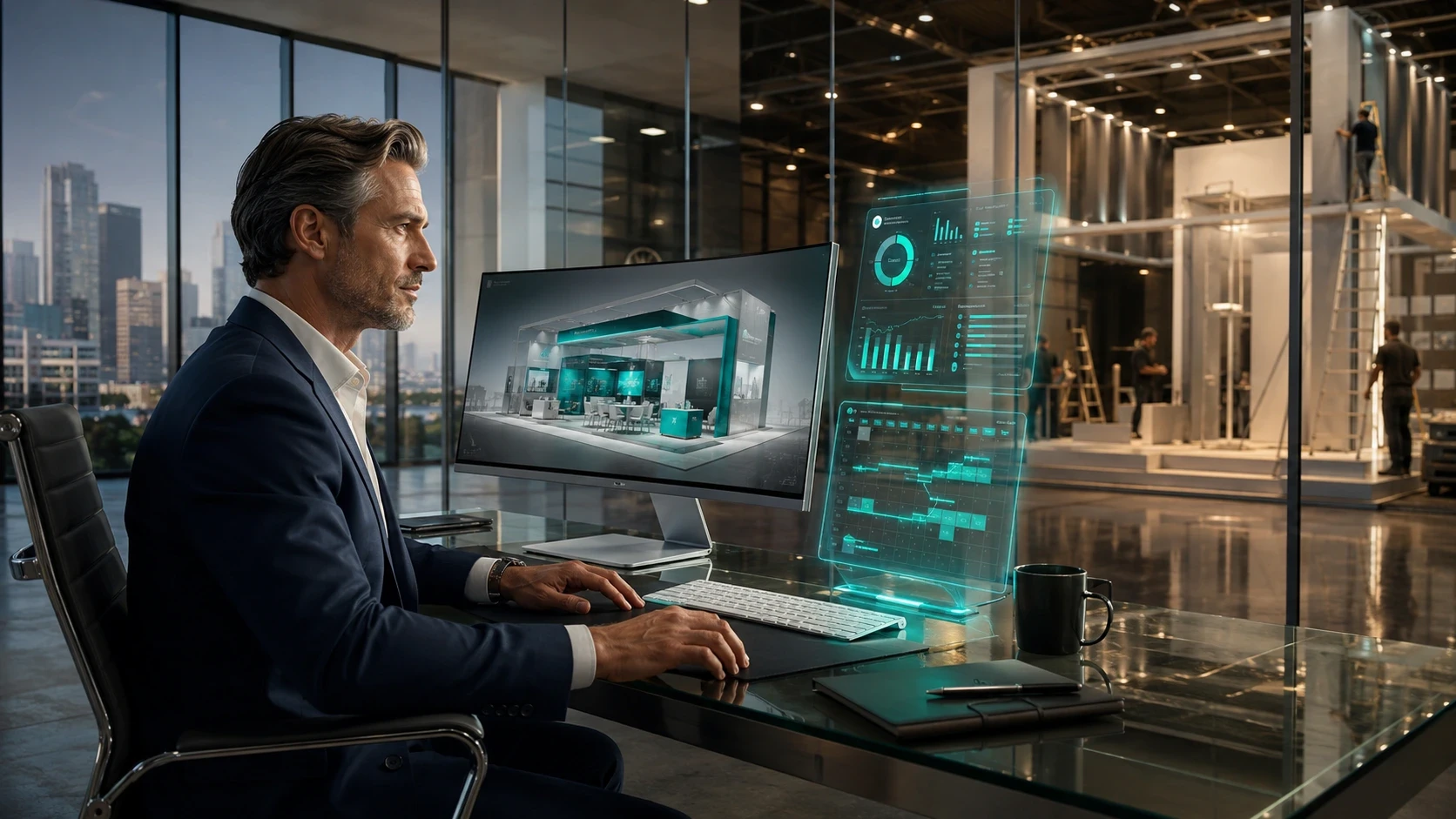
Article Summary: This article explains why exhibition booth and trade show display companies consistently miss critical incoming calls during peak production season - and how that silence translates directly into lost project revenue. It breaks down the structural causes, quantifies the financial impact, and presents AI phone agents as a practical, 24/7 solution for capturing RFQ inquiries, automating lead intake, handling client status update calls, and booking discovery meetings. Includes a realistic case study, a trade show season calendar, side-by-side comparison table, implementation guide, and FAQ section.
Key Highlights
• Exhibition booth and display companies face one of the most extreme call management challenges of any industry - demand surges by hundreds of percent for 8-12 weeks before major trade shows, then drops sharply.
• During peak production periods, the staff most qualified to answer sales inquiries are on the production floor, on-site at shows, or managing logistics - not at a phone.
• A single missed inquiry from a corporate exhibitor planning a large island booth can represent $50,000 to $200,000 in lost revenue.
• AI phone agents capture every inbound RFQ call 24/7, gather structured project details, and book discovery calls with the right sales contact automatically.
• Beyond new business, AI phone agents handle the high volume of project status update calls from existing clients, freeing project managers from constant interruption.
• International exhibitors and clients in different time zones can reach a professional AI agent in their own language, outside standard U.S. business hours.
• Exhibition companies that implement voice AI report fewer missed leads during peak season, more organized intake data, and measurably less disruption to production teams.
Table of Contents
• Why Exhibition Booth Companies Miss So Many Calls
• The Trade Show Season Calendar and Its Call Volume Impact
• The Revenue Cost of a Missed RFQ Inquiry
• 7 Ways AI Phone Agents Transform Exhibition & Display Operations
• Case Study: A Mid-Sized Booth Producer in Chicago
• Traditional Phone Handling vs. AI Phone Agent: Side-by-Side Comparison
• How to Implement Voice AI at Your Exhibition Company
• Common Mistakes Exhibition Companies Make with Call Management
• Best Practices for Exhibition Industry Voice AI
• Future Trends: AI in Trade Show and Exhibition Services
• Frequently Asked Questions
• Conclusion
Introduction
A purchasing director at a national retail brand is planning the company's appearance at a major industry show. They have a $120,000 budget, an ambitious booth design in mind, and six months to make it happen. They call three display companies to request quotes. Two don't answer. The third picks up, spends 15 minutes on the phone gathering the brief, and has a proposal in their inbox by Friday morning.
That third company just won a six-figure project. The other two will never know what they missed.
This scenario plays out constantly in the exhibition and trade show display industry - an industry built on visual impact, deadlines, and the ability to execute under pressure. For all the creativity and craftsmanship that goes into producing a world-class booth, many exhibition companies have a significant blind spot: their phone.
During peak production seasons, the people best positioned to handle new client inquiries are heads-down on the production floor, managing on-site installations, or coordinating shipping logistics. The phone rings. Nobody picks up. A qualified prospect moves on.
This article explains why that problem is more expensive than most exhibition companies realize - and how AI phone agents solve it without disrupting the production workflows that keep existing clients happy.
Why Exhibition Booth Companies Miss So Many Calls
The exhibition and trade show display industry has a staffing structure that makes consistent call coverage genuinely difficult. Unlike a law firm or a hotel, where customer-facing communication is a core part of daily operations, an exhibition booth company's primary workforce is production-oriented. Designers, fabricators, production specialists, and project managers are the heart of the business - and none of them can easily pause a complex build to take a client call.
Here is how the coverage gap forms at a typical exhibition company:
• Sales and account managers are the natural handlers of new business calls, but during peak season they are occupied with scope reviews, revision rounds, and project handoffs.
• Project managers are constantly pulled into production decisions and can spend hours on the floor during critical build phases.
• The front office - often a single coordinator or office manager - is overwhelmed during peak periods with shipping coordination, vendor communications, and client follow-up emails.
• On-site installation weeks are a complete blackout period for phone coverage. The entire team is at the show, focused on setup.
• After-hours inquiries - which are extremely common from corporate event planners who handle trade show logistics after their primary job responsibilities - hit voicemail and are rarely returned before the prospect has already called a competitor.
Research on small business call handling consistently shows that businesses miss between 40% and 62% of incoming calls (source: Alliance Virtual Offices). For exhibition companies, that figure likely increases significantly during the 8-10 weeks before a major show. The timing could not be worse: peak inquiry volume and peak production pressure hit at exactly the same time.
The Trade Show Season Calendar and Its Call Volume Impact
To understand why AI phone coverage matters so much for exhibition companies, it helps to look at when the pressure hits. The U.S. trade show calendar is not evenly distributed across the year. There are concentrated windows of activity that drive massive surges in both production demand and inbound inquiry volume - often at the same time.
Season / Period | Common Trade Show Activity (illustrative examples) |
November - January | Pre-show build season for Q1 shows; high inquiry volume from exhibitors planning spring appearances |
February - April | Spring trade show circuit; production teams fully occupied with installations and on-site travel |
May - June | Mid-year shows; post-spring debrief and summer planning calls begin |
August - October | Peak fall build season; simultaneous production of multiple large booth projects; highest missed-call risk |
Year-Round | International exhibitors calling across time zones; existing client status update calls; rental renewal inquiries |
What this calendar reveals is that there is almost no off-season in which the exhibition company can afford to be casual about phone coverage. Pre-show build pressure for one wave of shows overlaps with planning inquiries for the next. A company that treats call management as a secondary concern will lose business in every single one of these windows.
The August-to-October fall build season is consistently the highest-risk period. Production teams are fully committed to simultaneous projects, on-site trips are frequent, and new inquiries for next year's shows start arriving. This is when AI phone coverage delivers the most immediate return.
The Revenue Cost of a Missed RFQ Inquiry
Exhibition booth projects range in value from a few thousand dollars for a small rental booth to several hundred thousand dollars for a large custom island build with AV integration and permanent storage. Even a mid-market company with an average project value of $18,000 is dealing with significant revenue exposure when calls go unanswered.
The table below illustrates the potential monthly revenue impact during a peak season, based on a mid-sized exhibition company. The figures are illustrative - actual impact will depend on your call volume, average project value, and conversion rate.
Metric | Calculation | Result |
Inbound calls per month (peak season) | 80 calls | 80 calls |
Estimated missed call rate | 50% | 40 missed calls |
Legitimate RFQ rate | 55% of missed calls | ~22 missed leads |
Consultation-to-project conversion rate | 30% | ~7 missed projects |
Average project value | $18,000 | — |
Monthly revenue lost (peak season) | 7 x $18,000 | $126,000 |
Revenue lost over 3-month peak season | x 3 months | $378,000 |
Note: These calculations are illustrative. Average project values in the exhibition industry vary widely by booth size, customization level, and client type. A single large island booth project for a Fortune 500 exhibitor can exceed $150,000. Use your own numbers for a firm-specific picture.
The numbers in the table above cover just one peak season month. Across a full three-month fall build cycle, a mid-sized company that fails to capture 7 projects per month is looking at more than $350,000 in missed revenue - from calls that were made, and simply not answered.
7 Ways AI Phone Agents Transform Exhibition Booth & Display Operations
An AI phone agent is not a voicemail upgrade. It is an active, conversational system that engages callers, gathers structured information, qualifies their needs, and takes the next step - whether that is booking a discovery call or routing a status inquiry to the right project record. Here is exactly what that looks like for an exhibition and display company.
1. 24/7 RFQ Inquiry Capture During Trade Show Season
Corporate event planners, marketing directors, and brand managers do not always research and reach out during standard business hours. Trade show planning often happens at the edges of the workday - early mornings, evenings, and weekends. These callers are motivated and ready to brief a vendor. If your phone isn't answered, they simply move to the next name on their list.
An AI phone agent answers every call, at any hour, with a professional greeting that immediately signals competence. It then opens the intake conversation: What show are you exhibiting at? What are your timeline and booth size requirements? Have you worked with a display company before? This structured opening keeps the caller engaged and producing useful information instead of hitting a dead end.
For exhibition companies, 24/7 coverage closes a gap that is uniquely damaging in this industry. The Friday afternoon call about a custom island booth for a February show is a high-intent lead. Missing it is not a minor inconvenience - it is a lost project that may be worth more than an entire month of smaller work.
2. Automated RFQ Intake and Lead Qualification
When a prospective client calls about a new booth project, the information-gathering process is more involved than in most industries. An exhibition inquiry is not just name and contact details. To route it properly and give sales the context they need to respond quickly, you need to know:
• The name, date, and location of the trade show
• The booth space dimensions and configuration (inline, corner, island, peninsula)
• Whether the client needs a custom build, a rental, or a modular system
• The approximate budget range and whether this is a new design or an update
• Who the primary decision-maker is and their timeline for selecting a vendor
An AI phone agent configured for exhibition intake captures all of this in a single call. The caller answers conversational questions rather than filling out a form, which keeps the experience natural and professional. At the end of the call, the qualified lead record - complete with all project details - is in your CRM, tagged and ready for follow-up by the right sales contact.
This automated RFQ intake process is one of the most direct ways voice AI adds value in this industry. It replaces the patchwork of sticky notes, partial email threads, and incomplete messages that characterize most exhibition company intake workflows during busy periods.
3. Project Status Update Automation for Existing Clients
Not every incoming call is a new lead. A large share of inbound calls to an exhibition company - particularly in the 4-6 weeks before a show - comes from existing clients asking for project updates. Where are the graphics? Has the booth structure shipped? Is the installation crew confirmed for the setup date?
These calls are important to answer. A client whose $80,000 booth hasn't shipped yet and who can't get through on the phone is not going to be a repeat customer. But at the same time, pulling a project manager off the production floor to give a verbal status update on something they could just as easily check in the project management system is a real disruption to workflow.
An AI phone agent with CRM and project management integration can handle these status inquiries automatically. The caller identifies themselves, the AI pulls the relevant project record, and it delivers an accurate, up-to-date status without involving any staff member. If a situation is escalating or requires a human decision, the AI escalates immediately - with full context.
For exhibition companies managing 10, 15, or 20 simultaneous projects in the weeks before a major show, this kind of status call automation can free up several hours of project manager time per day.
4. Multilingual Support for International Exhibitors
Major U.S. trade shows attract exhibitors from around the world. European, Asian, and Latin American companies exhibiting at industry shows often need to commission display services from U.S. vendors. These clients may call with limited English proficiency, particularly for initial inquiries and status checks.
An AI phone agent with multilingual support removes language as a barrier to first contact. A German-speaking marketing manager at a European machinery company can describe their booth requirements in German. A Japanese electronics brand's event coordinator can call to check project status in Japanese. The AI handles the conversation, captures the information, and delivers it to your team in English.
This capability is not a luxury for exhibition companies that serve large trade shows with significant international participation. It is a practical way to serve a client segment that is often underserved by display vendors simply because of a communication gap at the point of first contact.
5. Overflow and Installation-Period Call Handling
There are two distinct periods when call coverage collapses completely for most exhibition companies. The first is the peak production push, when all hands are focused on simultaneous builds and the phone is simply not being monitored consistently. The second is the on-site installation period, when the crew - including the project managers and account leads who know these client relationships best - is physically at the show venue.
During an installation week, an exhibition company may have zero reliable phone coverage. If a new inquiry comes in, it waits. If an existing client has an urgent question, it waits. If a prospect calls to say they are ready to sign a $60,000 project, that call goes to voicemail and the caller's next call is to a competitor.
An AI phone agent eliminates both of these coverage gaps. It answers every overflow call during peak production, handles the installation-period coverage without any involvement from the on-site crew, and ensures that no caller reaches a voicemail box during the periods when the team is least able to manage it.
6. CRM and Project Management Integration
The value of a phone call is only as good as what happens to the information afterward. In many exhibition companies, intake information from new inquiry calls lives in a project manager's notes, a salesperson's memory, or a shared inbox that nobody checks consistently during peak season. Leads fall through. Details get lost. Follow-up is delayed.
An AI phone agent that integrates with your CRM and project management platforms changes this entirely. When a new RFQ call is completed, a structured lead record is created automatically - populated with the show details, booth specifications, timeline, budget range, and contact information gathered during the call. A follow-up task is assigned to the right account manager. A discovery call may already be on the calendar.
For project status calls, the AI pulls data from your project management system in real time, providing callers with accurate updates without creating any new workload for your team. This bidirectional integration is where voice AI moves from being a call-answering service to being a genuine workflow automation tool.
7. Consistent, Professional Brand Voice on Every Call
Exhibition companies are in the business of creating powerful first impressions for their clients. A premium brand that spends $100,000 on an island booth expects its vendor to project that same level of professionalism from the very first interaction.
When a prospective client calls and reaches a rushed, distracted, or unavailable front desk, that first impression tells them something about how their project will be managed. An AI phone agent that answers professionally, asks intelligent questions about their project, and confirms that a discovery call has been scheduled communicates the opposite: that this is a company that is organized, responsive, and capable of handling a high-value project.
The AI can be fully scripted to match your brand's tone. If your company leads with creativity and warmth, the AI reflects that. If your positioning is more enterprise and technical, the script adapts accordingly. Every caller gets the same quality of first contact, regardless of when they call or how stretched the team is.
Case Study: A Mid-Sized Booth Producer in Chicago
Company profile: A full-service exhibition booth company specializing in custom builds, modular systems, and rental booths for mid-market and enterprise clients. Twelve full-time staff including four designers, three production specialists, two project managers, two account managers, and one office coordinator. Serves clients primarily in the manufacturing, healthcare, and technology sectors across U.S. trade shows.
The problem: The office coordinator handles the phone during business hours, but is fully occupied with shipping coordination, vendor management, and client document requests during peak build periods. Both account managers are client-facing and often unavailable for new inquiries. Project managers are on the floor or on-site. The result: calls go to voicemail during peak season with high frequency. The company had no data on how many calls were being missed or from whom.
The specific pain points identified:
• New RFQ inquiries were arriving during the fall build season but not being captured due to voicemail rates increasing significantly
• Existing clients calling for project status updates were reaching voicemail and escalating to email - creating duplicate communication threads and additional coordination work
• International clients from European exhibitors were calling outside U.S. business hours and not getting through
• The account managers had no consistent intake record for new inquiries - details varied depending on who answered and when
The solution deployed: VoxietyAI configured an AI phone agent for the company's specific intake flow. The AI captures full RFQ details during the call, qualifies the inquiry by show date and booth complexity, and books a discovery call with the appropriate account manager. For existing clients, the AI handles project status inquiries using integration with the company's project management platform. Multilingual support covers German, Spanish, and Japanese - the primary languages of their international client base.
Results after 60 days during fall build season:
• After-hours call capture: Increased from near zero to 100%
• RFQ intake quality: Every new inquiry arrives in the CRM with full project details captured during the call - no more incomplete message slips
• Project manager time recovered: Reduction of approximately 5-7 status update calls per day being routed away from production staff
• Discovery calls booked automatically: A measurable share of new RFQ calls resulted in a discovery call booked within the same interaction, without any account manager involvement
• International client satisfaction: German and Spanish-speaking clients noted the improved first-contact experience in follow-up correspondence
Note: These results describe a realistic scenario based on outcomes exhibition companies can expect from implementing voice AI. Actual results will vary based on call volume, project mix, and configuration.
Traditional Phone Handling vs. AI Phone Agent: Side-by-Side Comparison
Function | Traditional Phone Handling | AI Phone Agent |
Call Hours | Business hours only | 24/7, including weekends and holidays |
Peak Season Capacity | Limited by available staff | Unlimited simultaneous calls |
RFQ Information Capture | Manual, inconsistent | Structured, automatic, every call |
Status Update Calls | Project manager interrupted | AI handles with CRM integration |
International Client Support | Limited to staff language | 100+ languages |
CRM Data Entry | Manual after the call | Automatic during the call |
Discovery Call Scheduling | Requires callback | Booked instantly by the AI |
On-Site Installation Period | Zero coverage | Full coverage, no interruption to crew |
Cost Structure | Fixed salary + overhead | Subscription-based, fraction of cost |
Intake Consistency | Varies by who answers | Identical process on every call |
How to Implement Voice AI at Your Exhibition Company
Implementation is straightforward and can be completed well in advance of your next peak season. Here is a step-by-step overview of what the process looks like for an exhibition and display company.
Step 1: Audit your current call flow. Before configuring anything, understand what is happening now. How many calls do you receive per month? What percentage are new inquiries versus existing client calls? Which periods have the worst coverage? This baseline gives you the data to measure improvement.
Step 2: Map your RFQ intake requirements. Identify exactly what information you need to capture from a new prospect during a first call. Work with your account managers and project managers to build a list of qualifying questions that mirrors what they would ask in an initial conversation. Show name, dates, booth dimensions, type of structure, design expectations, and budget range are typical starting points.
Step 3: Define your status update protocol. Decide which project data the AI should be able to surface for existing client status calls. This requires integrating the AI with your project management platform. Define which project fields - production status, shipping date, installation crew confirmation - should be accessible to the AI and how they should be communicated to clients.
Step 4: Build and test the call scripts. Work with your VoxietyAI implementation specialist to script both the RFQ intake flow and the status update flow. Test with real team members playing the role of callers before going live. Pay particular attention to edge cases: callers with very large or unusual briefs, clients with urgent concerns, and callers who are not a fit for the company's services.
Step 5: Integrate with CRM and project management. Connect the AI to your CRM so that completed RFQ calls automatically create a new lead record with all captured details. Connect to your project management system for status inquiries. Both connections should be in place before go-live to capture the full efficiency benefit from day one.
Step 6: Go live before peak season, not during it. This is a critical timing point for exhibition companies. Implement and test the system during a quieter period so that by the time the next peak build season arrives, the AI is fully tuned and operating smoothly. Deploying during a crisis is possible but not ideal.
Step 7: Review and optimize at the end of each peak cycle. After each major show season, review call transcripts and intake records. What questions do callers frequently ask that the AI isn't handling well? What types of projects are calling but not converting? Use this data to improve the scripts and qualification criteria before the next peak cycle.
Common Mistakes Exhibition Companies Make with Call Management
Most exhibition companies that struggle with missed calls are aware of the problem but underestimate how to solve it. These are the most common errors.
Treating voicemail as a backup system. Voicemail is not a lead capture tool. Research consistently shows that the overwhelming majority of callers - particularly for professional and creative services - do not leave messages. They expect to speak with someone or they move on.
Assuming the office coordinator can handle all peak-season calls. A single coordinator managing shipping logistics, vendor invoices, and client documents during a production peak is not realistically able to prioritize phone coverage as well. This is not a staffing failure - it is a structural limitation that AI is specifically designed to solve.
Waiting until after peak season to address the problem. By the time the season is over, the leads are gone. The revenue from missed calls during peak season cannot be recovered after the fact. The solution needs to be in place before the volume hits.
Using a generic answering service without exhibition-specific scripting. A general-purpose call answering service that takes a name and phone number is almost no better than voicemail in this context. The value is in capturing structured RFQ information and qualifying the lead during the call itself - which requires an AI agent configured specifically for your intake process.
Not connecting call data to the CRM. If the AI takes a call and the data ends up in a separate system that no one checks, the benefit is limited. Full CRM integration is what converts an AI phone call into an actionable sales record.
Best Practices for Exhibition Industry Voice AI
These practices consistently improve outcomes for exhibition and display companies that implement AI phone agents:
• Deploy before your heaviest build season, not during it. Give yourself at least 30 days of testing and tuning in a lower-volume period before the peak hits.
• Script for the full range of booth types you produce. A rental booth inquiry needs different qualifying questions than a custom island build. Configure the AI to branch appropriately based on early caller responses.
• Use the AI for status calls as well as new leads. Companies that only configure the AI for new inquiries miss a major portion of its value. Status update automation frees your production team from a constant source of interruption.
• Set a 2-hour follow-up target for AI-captured leads during business hours. A prospective client who called outside business hours and had their inquiry captured by AI is still a warm lead - but not indefinitely. Fast follow-up maintains the momentum.
• Review transcripts weekly during peak season. Active monitoring during your highest-volume periods allows you to catch and fix any script issues before they affect a significant number of inquiries.
• Brief your entire team on how the AI handles calls. Your project managers, designers, and production staff should understand what callers experience when they reach the AI, so they can answer follow-up questions from clients with context.
Future Trends: AI in Trade Show and Exhibition Services
The application of AI in the trade show and exhibition industry is expanding beyond phone handling. Here is where the technology is heading over the next few years.
AI-powered RFQ analysis and scoping. Beyond capturing project details on a call, AI systems will increasingly assist with preliminary scoping - estimating production complexity and flagging capacity conflicts based on incoming RFQ data, before a human account manager ever reviews the lead.
Proactive client communication automation. Rather than waiting for clients to call for status updates, AI systems will proactively reach out via phone or SMS at key project milestones - design approval, production start, shipping confirmation - reducing inbound status call volume further.
Integration with trade show database platforms. AI phone agents will connect with trade show databases to automatically verify event details provided by callers - confirming show dates, venue, and booth space dimensions - improving intake accuracy and reducing errors that propagate through the project.
Predictive capacity planning. AI systems will analyze historical call volume, inquiry patterns, and trade show calendar data to predict when peak demand will hit and how many qualified leads are likely to arrive. This gives production planning teams more lead time to prepare for high-volume periods.
Voice AI for post-show relationship management. After a show, AI agents will conduct automated check-in calls with exhibiting clients to gather feedback, discuss next year's planning, and identify upsell opportunities - turning the post-show period into an active client retention and development phase rather than a quiet gap between seasons.
Exhibition companies that build voice AI into their operations now will be well ahead of this curve when these capabilities become standard expectations in the industry.
Frequently Asked Questions
Can an AI phone agent handle the complexity of a trade show booth RFQ inquiry?
Yes - provided it is configured specifically for exhibition intake, which is exactly what VoxietyAI does for companies in this industry. A general AI phone agent with a generic script will not perform well on a booth RFQ call. But an agent built around your specific qualifying questions, structured to branch based on booth type and project scale, and integrated with your CRM will capture the full scope of a new inquiry in a single call. The AI does not prepare a proposal - it captures the structured information your account manager needs to follow up intelligently and quickly.
How does an AI phone agent handle existing client calls during on-site installation periods?
For existing clients calling during installation periods, the AI handles two types of inquiries: project status updates and urgent issues. For status updates, the AI accesses your project management system to provide accurate, real-time information. For urgent issues - a client concerned about a delayed shipment or a damage claim, for example - the AI captures the details and routes a priority alert to the appropriate project manager via SMS or CRM notification, so the issue is escalated immediately even when the team is on-site. This ensures critical matters are flagged without the entire crew being accessible by phone throughout the installation.
How long does it take to set up an AI phone agent for an exhibition booth company?
Most exhibition companies can be fully operational with a VoxietyAI phone agent within two to three weeks of beginning the setup process. The majority of that time is spent on script development and CRM integration. The core AI configuration itself is fast. For a company approaching a peak build season, the most important thing is starting early enough to have a testing window before the volume arrives. A 30-day lead time before your next major production peak is a reasonable minimum.
Conclusion
Exhibition booth and display companies are in a uniquely demanding business. Clients expect flawless execution under extreme time pressure, every single time. That same standard of reliability needs to extend to how the company handles phone calls - especially during the seasons when the pressure is highest and the calls are most valuable.
AI phone agents close the coverage gap that every exhibition company faces during peak season. They answer every RFQ inquiry, capture structured project details, handle existing client status calls, and book discovery meetings - around the clock, without diverting a single staff member from the production floor.
The revenue at stake during trade show season is too significant to leave to voicemail. If your company is ready to capture every inquiry this peak season and stop losing high-value projects to competitors who simply picked up the phone, VoxietyAI can build a voice AI solution designed specifically for exhibition and display operations. Book a discovery call today and see what it looks like in practice.
Suggested External Sources
https://www.ceir.org/ (Center for Exhibition Industry Research - for trade show industry data)
https://www.exhibitoronline.com/
https://www.tsea.org/ (Trade Show Exhibitors Association)
https://www.salesforce.com/blog/digital-customers-research-blog/